


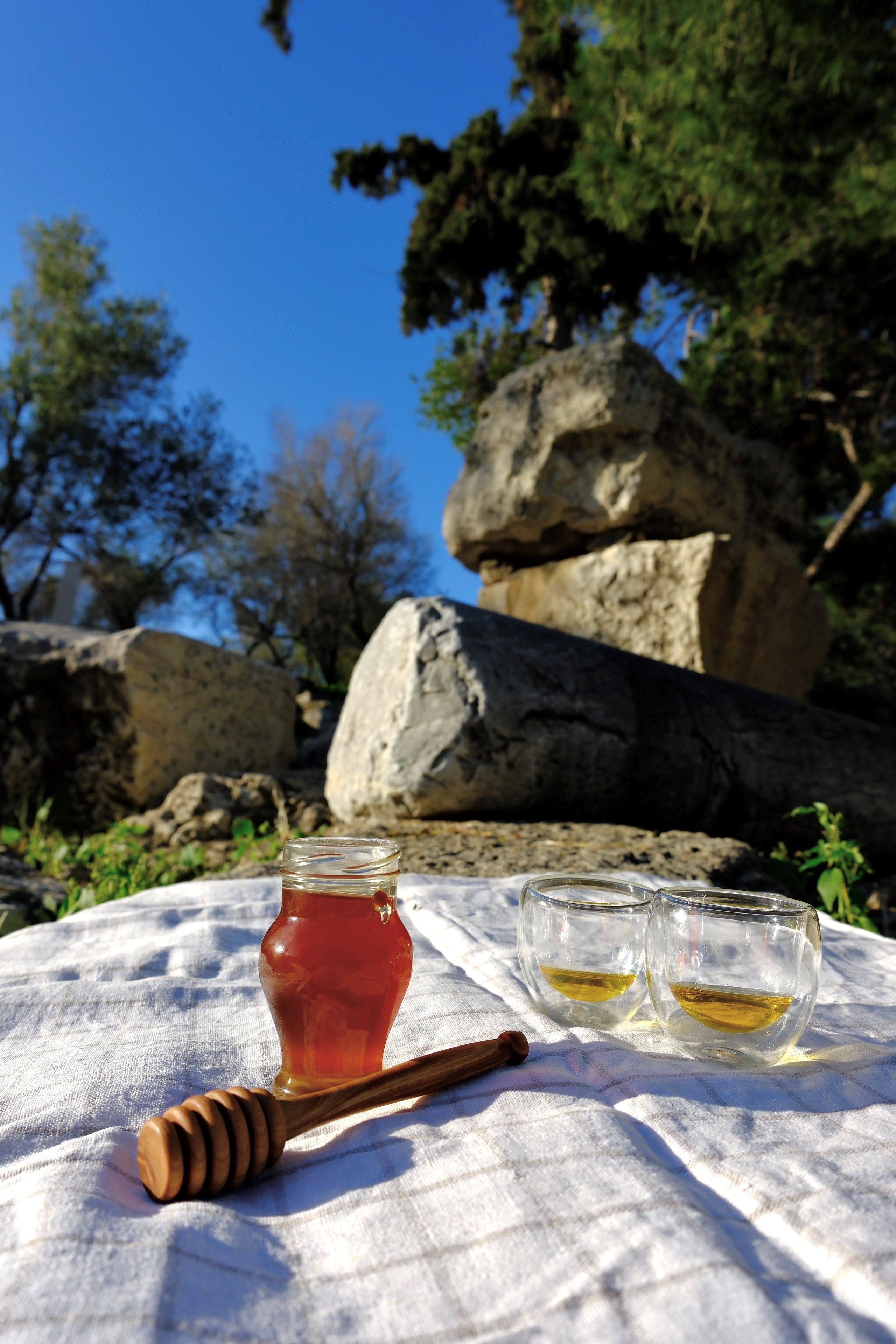
Every Greek village swears its honey is the best. Ask anywhere (from the thyme slopes of Kythera to the pine forests of Evia) and you’ll get the same proud reply: “Ours is different.” And it’s true. No two jars of Greek honey ever taste alike, because no two patches of land ever hum with the same flowers, winds, or saints.
Somewhere on the road between Xironomi and Ellopia, I stop at a roadside stall where a woman in a headscarf sells honey in old jam jars. The label says only “Meli tou Horio” - Village Honey. When I ask which flowers it’s from, she shrugs. “Whatever the bees choose this year.”
The geography of sweetness
Greece’s landscape is a patchwork of microclimates: mountains that trap clouds, islands baked by salt, valleys that bloom in secret. Bees travel only a few kilometres from their hive, which means their honey carries a local passport.
In Crete, thyme dominates; in Evia, pine; in Epirus, chestnut and wild oregano. Even two neighbouring villages can yield radically different honeys because of altitude or rainfall. My friend Christos, a beekeeper from Athens, once told me, “The honey my bees produce tastes of the fields and flora they forage from – and that can change with the direction of the wind.”
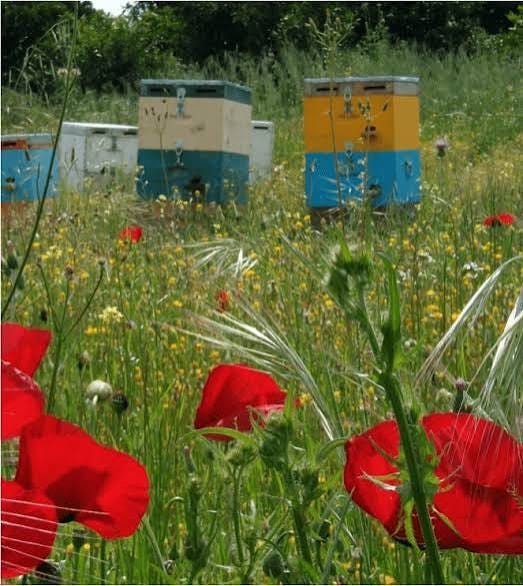
That’s not poetry (well, it’s a little poetic). But it is also science. When winds shift, pollen sources change, and with them, the ratio of sugars and trace minerals that define flavour. The result is a thousand small dialects of sweetness.
Did You Know?
Pollination range: A bee typically forages within 3 km, meaning one hive’s flavour map equals a single valley.
Greek variety: The country produces over 30 distinct honey types, more than any other in Europe.
Altitude effect: Every 100 metres of elevation changes nectar composition enough to alter colour and taste.
Oldest record: Homer mentions “wild honey from Taygetus” - the same mountain that still supplies modern hives.
Across Greece, each village guards its honey ‘recipes’. In Tilos, they mix sage and heather honey for winter colds. In Pelion, they ferment honey with walnuts and lemon peel into a tonic called meliporto. In Ikaria, the so-called “island of longevity,” locals drizzle dark pine honey over everything from goat’s milk to political arguments.
These are not commercial products; they’re highly local, even personal, geographies. A beekeeper in Karditsa once sent his entire crop to friends rather than sell it.
In rural Greece, to give honey is to confess affection. At Easter, jars appear on doorsteps unannounced. At weddings, the couple eats spoonfuls to “sweeten the year.” When a child leaves for the city, mothers pack a jar with the words, “So you don’t forget our taste.” In some villages, honey still seals deals. A handshake might be followed by a small pot exchanged — payment in flavour, not currency.
Did You Know? (Part II)
Unwritten laws: In many villages, it’s taboo to move hives on Saint days - believed to anger the patron bee spirit.
Bee folklore: Like in many cultures, the Greek saying “He’s got honey on his tongue” describes someone persuasive, but also slightly dangerous - a reminder of sweetness’s sting.
Microbe miracle: Local honeys contain native yeasts that can start natural fermentations; some villagers make “honey vinegar” this way.
Colour code: Lighter honeys (thyme, citrus) signal spring; darker (pine, fir) mark autumn - a visible calendar in glass.
In the northern region of Epirus, an annual “Honey of the Year” festival crowns the best small-batch producer. Judges are not scientists but grandmothers, who sample each jar with bread and declare winners by consensus.
The winning honey one year came from bees feeding on wild oregano near the Albanian border. The next, a blend of heather and fir from the mountain village of Vitsa. Both were sold only within 20 kilometres - hyper-local, fleeting, impossible to replicate.
This ultra-specificity has become Greece’s quiet advantage. While the world industrialised beekeeping, Greek producers doubled down on place. Small scale became prestige. Today, global buyers chase jars labelled “Thyme of Antikythera” or “Chestnut of Pindos,” willing to pay extra for the coordinates of authenticity.
The alchemy of the air
Bees are exquisite translators of geography. They turn landscape into chemistry: the minerals of soil into trace flavours, the moisture of clouds into viscosity. In tasting honey, you’re tasting not just flowers but geology and weather.
A spoonful of pine honey from the hills of Evia (Greece’s second largest Island) smells like resin and rain. Cretan thyme honey tastes like summer dust and sunlight. In northern Greece, chestnut honey can verge on bitterness (a flavour locals call andrika, “manly”). In the Cyclades, sage honey glows pale gold, tasting faintly of sea salt.
There’s no national honey; only infinite local favourites derived from the terroir they come from.
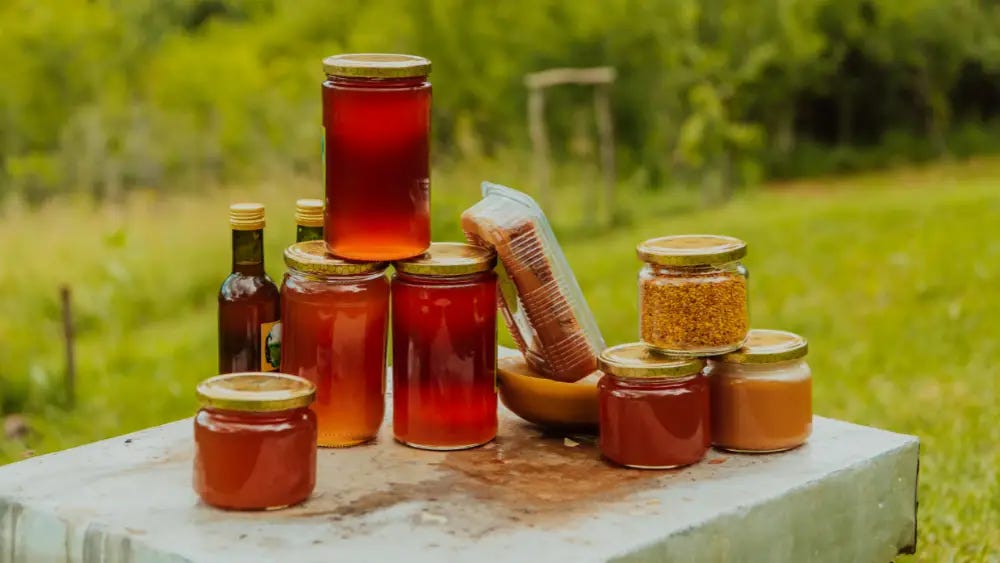
However, as climate change scrambles flowering patterns, micro-honeys are becoming endangered. Drought shifts bee routes; imported strains dilute flavour profiles. But young apiarists are now rediscovering the old ways: moving hives seasonally, avoiding synthetic feeds, trusting instinct.
One cooperative in Evia runs workshops titled “Let the Bees Decide” - teaching new keepers to observe bloom cycles before moving hives. In one recent interview, its founder Giorgos reflects on the importance of traditional beekeeping methods. “Our grandparents had no data. They had sky.”
The irony, of course, is that the more global the world gets, the more we crave things that can’t be scaled. Greece’s secret honeys survive precisely because they refuse to be copied.
Back on the road between Xironomi and Ellopia, I open that anonymous jar from the roadside. The honey is dark amber, almost red. It smells of wet stone and thyme. On the tongue it shifts - first floral, then earthy, then something like smoke. It tastes of altitude.
No label could capture it. No barcode could fix it in time. It is, like its maker, unrepeatable.
Somewhere in a village not on any map, the bees are still at work, turning sunlight into memory. And in every spoonful, Greece whispers: you can’t mass-produce the real thing.
Sources