


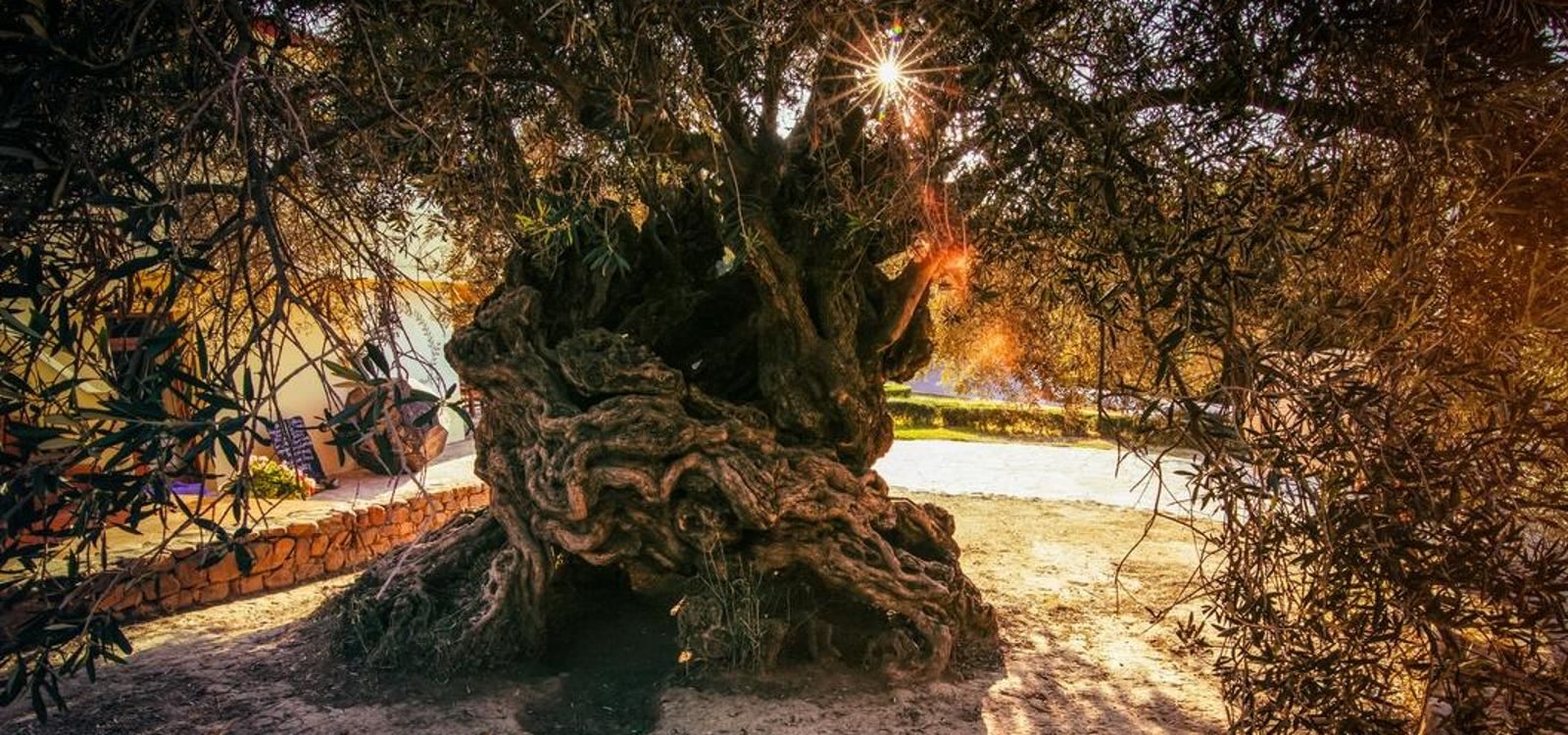
I first saw the Olive Tree of Vouves at dusk on a warm May day six years ago.
The sun was folding itself into the Cretan hills, staining the stone walls pink, and there it stood - a vast, gnarled creature that looked half tree, half cathedral. Its trunk twisted into hollows big enough to stand in; its bark resembled the folds of an elephant.
A sign claimed it was 3,000 years old. The locals shrug: “Could be older.” Either way, this single tree has outlasted kingdoms, currencies and beliefs. It was already ancient when the Parthenon was still an idea in marble.
The Vouves tree is one of at least ten olive trees in Crete thought to pre-date Christ. Its variety, Tsounati, is a hardy survivor — drought-resistant, wind-proof, and capable of regenerating from a stump. Botanists call it a “phoenix species.”
If you imagine its lifetime as a calendar year, Minoan merchants appear around mid-January, the Romans in May, the Byzantines in September. Crusaders, Venetians, Ottomans and tourists make their entrances during the last frantic week of December, with Donald Trump only getting a look-in seconds before midnight on New Year’s eve.
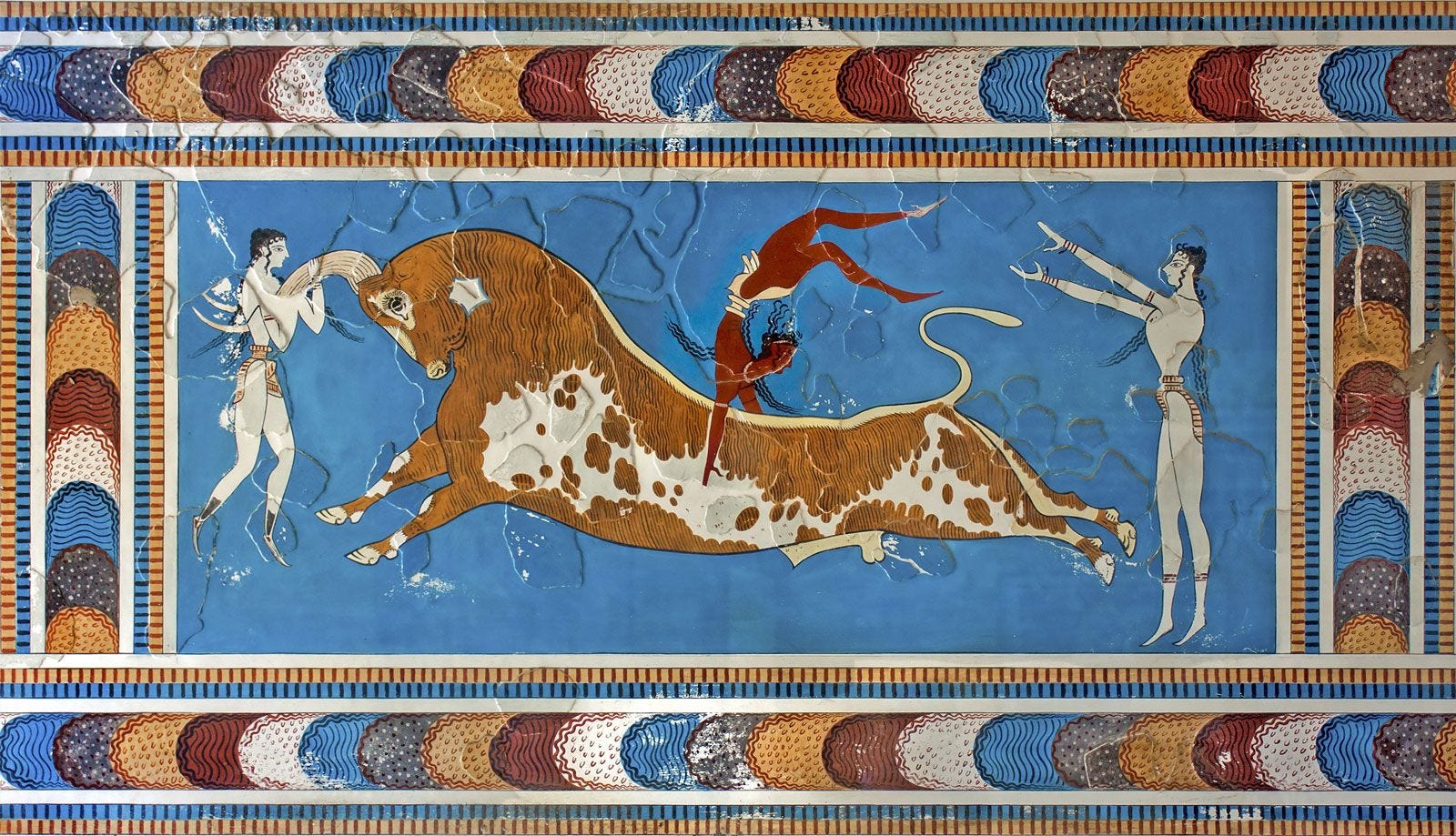
In the Bronze Age palaces at Zakros and Phaistos, archaeologists found pithoi — storage jars as tall as a person, still faintly scented with oil. The Minoans recorded olive shipments on clay tablets; oil was a tax, an offering, a kind of currency. By the time Homer sang of “shining oil” on athletes and kings, Crete had already exported the stuff for a millennium.
The view from the grove
Today the tree grows beside a small museum and a low whitewashed café. The owner, Nikos talks about his own oil as being “from her grandchildren,” referring to the ancient trunk. The taste is peppery, almost metallic — the flavour of time distilled into green.
Every autumn, the hills buzz with harvest. Families arrive with tarps, nets and ladders. Pickup trucks rattle down from the mountains stacked with sacks of olives. In tiny presses, the air turns buttery and loud. The process hasn’t changed much since Homer’s day: crush, press, decant, wait.
What has changed is climate. Summers are hotter, rains shorter. Yet the old trees still bear fruit.
For the Greeks, the olive was divine technology. Athena gifted it to humanity in her contest with Poseidon; she won the city of Athens for that single act of invention. Solon’s laws later protected sacred olive trees (the Moriai) whose oil lit temples and anointed athletes.
To damage one was to offend the gods. Even now, a few of those trees survive within modern Athens, squat and fenced like small archaeological celebrities.
The olive became Greece’s metaphor for everything worth keeping: peace, persistence, civilisation itself. You can see why when you stand beneath one. They don’t reach for the sky like pines; they hunker down, grow sideways, thicken with age. They’re built not for glory but for continuity.
Did You Know?
World record lifespan: The oldest scientifically dated olive tree may be the one at Vouves - carbon tests show parts of it are at least 2,000 years old, though some Cretans claim 4,000.
Living lineage: Saplings taken from the tree have been planted at Olympic sites to symbolise peace and endurance.
Resurrection biology: An olive tree cut to the stump can re-sprout within a year, drawing on hidden root energy, a trait that’s saved many groves after wildfires.
Language roots: The Greek elaion (olive) gave Latin oleum and English “oil.” Civilization runs linguistically on olives.
Echoes of empires
During the Roman era, Cretan oil powered lamps across the Mediterranean. Byzantines used it in sacred lamps and surgery. Under Ottoman rule, villagers paid tax in oil instead of coins. When the Germans occupied Crete in the 1940s, they commandeered presses for their army kitchens.
Recently, a farmer from near the village of Xironomi in central Greece told me that he seems himself as simply the custodian of his family’s ancient trees. “They will stay long after I and my children have gone.
Today, drone photographers film their fractal branches; influencers pose with them; UNESCO circles the idea of “heritage groves.” The olive doesn’t care. It just keeps metabolising sunlight into faith.
Geneticists at the University of Crete have sampled DNA from trees like Vouves and found they’re almost identical to younger Tsounati and Koroneiki groves nearby. In other words, farmers have been cloning the same lineage for millennia - an unbroken biological thread from Crete to the supermarket bottle.
And yet every tree carries micro-mutations, adaptations that make it unique. A botanist described it to me as “evolution by memory.” The trees remember drought, salt, frost — and pass that knowledge down through their shoots.
It turns out the olive tree really is what the ancients claimed: half mortal, half divine.
A lesson in patience
On that May day six years ago, as dusk settles, the Vouves tree looks almost human; one of the ancient villagers observing the world as it passes by the café they sit in - scarred, stooped, serene. Children play around its base while older villagers sip raki in plastic cups. No one speaks loudly; it feels like interrupting a prayer.
I ran my hand over the bark. It was surprisingly smooth, warm from the day. Somewhere in its fibres are atoms that were alive when Knossos ruled the seas.
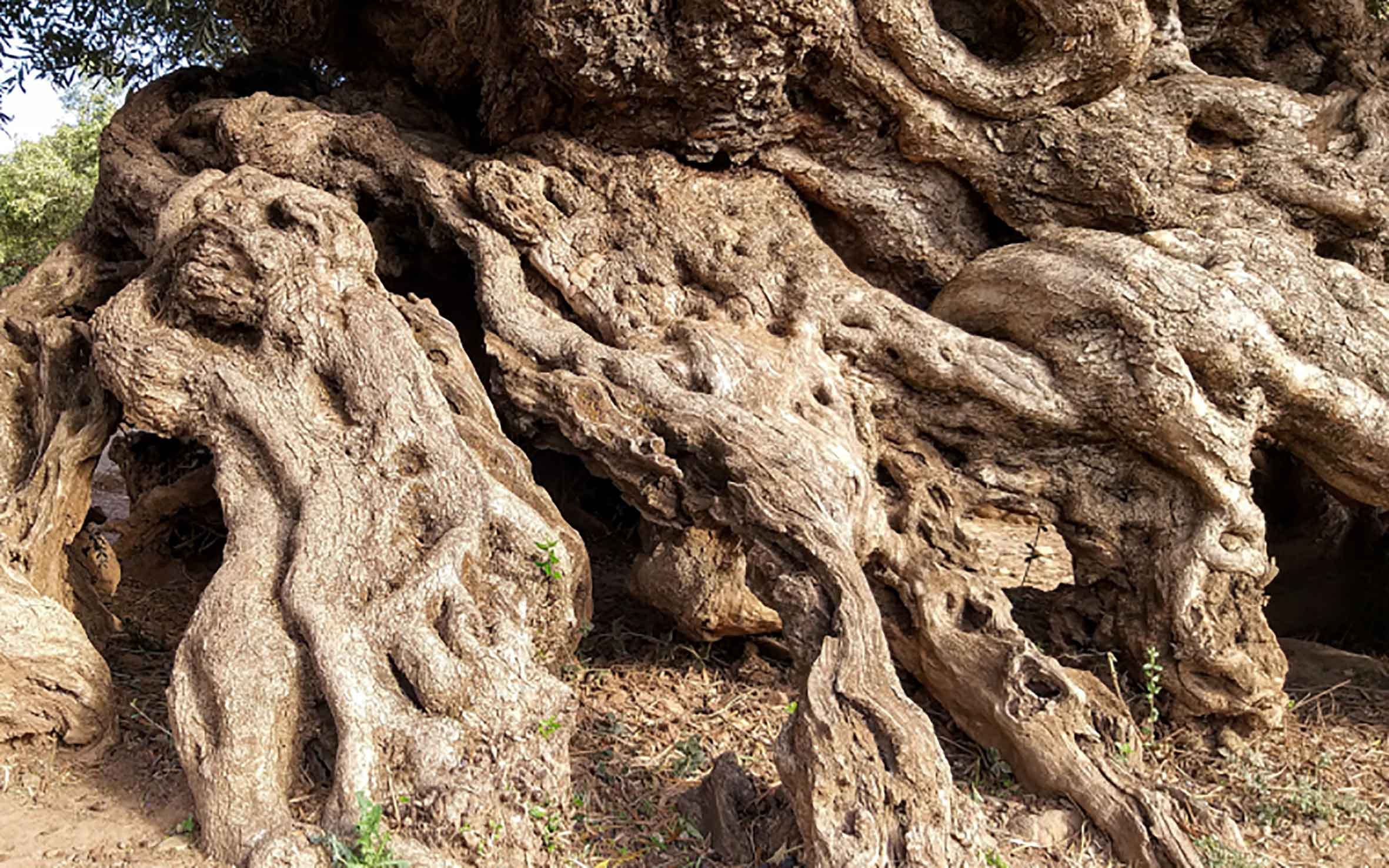
The tree has survived wars, crusades, empires and heatwaves not through strength, but through adaptation - bending, re-sprouting, refusing to quit. If there’s a moral, it’s the same one the Greeks found thousands of years ago: lasting power comes from rootedness.
We chase innovation; the olive practises endurance. And that, perhaps, is why this tree still stands when everything built around it has turned to dust.
Sources