



The olive harvest begins with a sound: the flutter of nets unfolding over red soil, the metallic ring of ladders, and a low chorus of voices testing the morning air.
On our farm 30km south, my family gathers at first light, three generations deep. My daughter, the youngest, headphones dutifully glued on, bob their head to thrash metal. The oldest, Dimitra, my cousin’s maternal grandmother, sits on a rickety chair, looking on and smiling to herself. She has witnessed this scene over decades. Too old now to scramble around the trees, she is content to watch and remember – the decades old trees being harvested.In most of Europe, olive oil now comes from vibrating poles, vacuum harvesters, and giant presses that never sleep. But in many parts of Greece (especially the inland hamlets around Thebes and Messinia) families still harvest by hand. They call it ‘liolofóros’, “the olive road,” and it’s as much a social ritual as farm work.
For six weeks, villages rearrange themselves around the groves. Children return from cities. Schools close early. Local bakeries open at dawn to supply bread and strong coffee to the pickers. “We don’t consider this work,” says Ziad’s mother Tina. “It’s as much about harvesting family tradition as it is the family olives.”
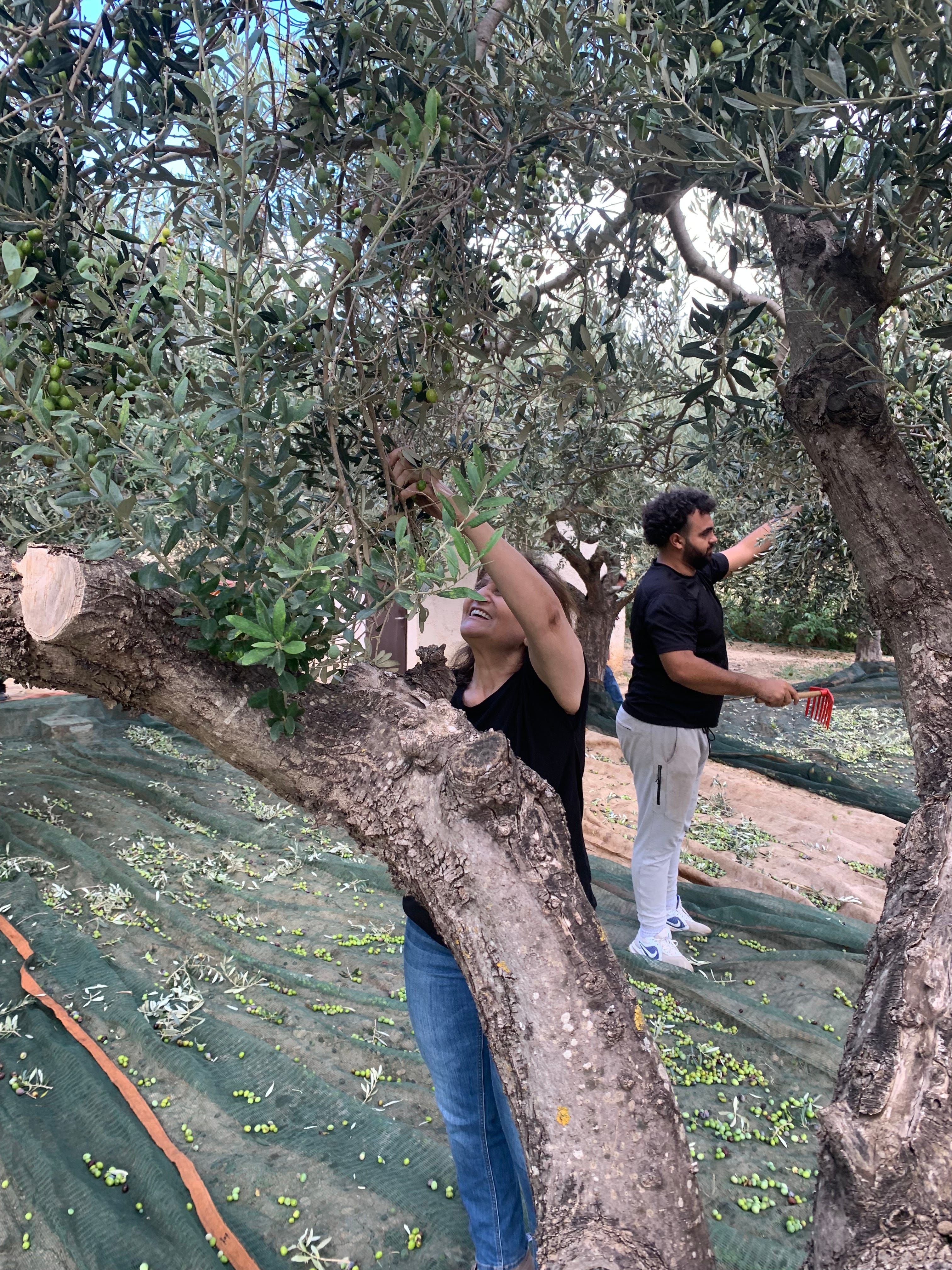
Each tree is a person; each has its temperament. When harvesting them, approach like surgeons. A gentle combing motion loosens fruit without tearing stems. Fallen olives bounce into green nets, later poured into woven baskets that smell of smoke and salt.
Did You Know?
Labour maths: A skilled picker gathers around 80 kg of olives a day by hand; mechanical harvesters can reach 1,000 kg — but bruise fruit and dull flavour.
Timing is tastes: Early-harvest olives (picked green from mid-October onwards in most parts of southern and central Greece) yield oil rich in antioxidants; late harvest gives sweeter, golden tones.
Sacred schedule: Traditional farmers begin after St Demetrios Day (26 October) - the same week Byzantine monasteries start their annual harvest prayers. With a world heating quickly, that date feels redundant as olives ripen more quickly and harvests start earlier.
Hand-picking looks serene but sounds like percussion: sticks tapping branches, olives raining into nets, chatter and laughter mixing with birds. A transistor radio balances on a stone wall, playing old songs. “The trees like music,” Dimitra jokes. “The olives drop more when we play the old classics.”
By mid-afternoon, fingers ache and the nets shimmer with a mix of green and purple fruit . Someone pours wine into tin cups. Someone else lights a small fire for souvlaki and bread. The grove becomes a picnic - part labour, part liturgy.
When the last basket fills, they bless the grove with a few drops of oil from last year’s harvest.
Why they still do it…
Economically, it makes no sense. Mechanical harvesting is ten times faster. But these families value flavour over efficiency. Bruising triggers oxidation, dulling the peppery bite that defines top-grade oil. “Machines can harvest these trees far faster,” my cousin Ziad explains “And that works when you have large estates with thousands of trees planted uniformly. It’s impractical to do it with these groves,” he says pointing at the sprawling and irregularly spaced trees.
“It’s also not as much fun,” his mother adds. “There’s no soul when you use the machines. No – the old ways allow you to do it in a way that brings us all together. It’s hard work. But nothing in life is worth much without a bit of toil and sweat,”
Ziad points out that thousands of young Athenians now spend harvest weekends climbing ladders, some listening to music with earbuds in, others just losing themselves in the sound of tree lees rustling and olives dropping. “It’s therapy. You can’t doomscroll in an olive tree.”
Hand-picking also preserves biodiversity. Gentle harvesting avoids damaging buds that will bear next year’s fruit and disturbs fewer nesting birds. The EU’s 2024 sustainability study found traditional groves store 40 percent more carbon than intensively farmed ones.
Did You Know? (Part II)
Social network: In Messinia, families still exchange labour instead of cash - a system called ‘antallagi’. “You pick mine, I pick yours.”
Olive lore: Pickers avoid whistling in the grove; it’s said to invite wind and drop the fruit too early.
Blessing ritual: The first pressed oil of the season is taken to church to light the sanctuary lamps.
Longevity link: Studies from the University of Patras show that small-scale growers over 70 report lower stress and blood pressure than urban peers - the “olive-picker’s paradox.”
After sunset, the family get into respective cars and drive to the Kadmus olive mill, part owned by myself and Ziad. It’s a squat metal shed, but as you drive up to it you can hear it humming with life. Inside, stainless-steel drums replace traditional stone wheels, but the cold-pressing process it operates is millennia old. And smell is eternal: crushed fruit, warm metal, wet leaves.
The mill’s operations director, Spyros, pours the green liquid through a mesh and into a container. It looks radioactive - luminous chartreuse with flecks of gold. Everyone crowds around. Tina, Ziad’s mother dips bread, tastes, nods. “Warm, grassy, pepper at the end,” she says. “Perfect.”
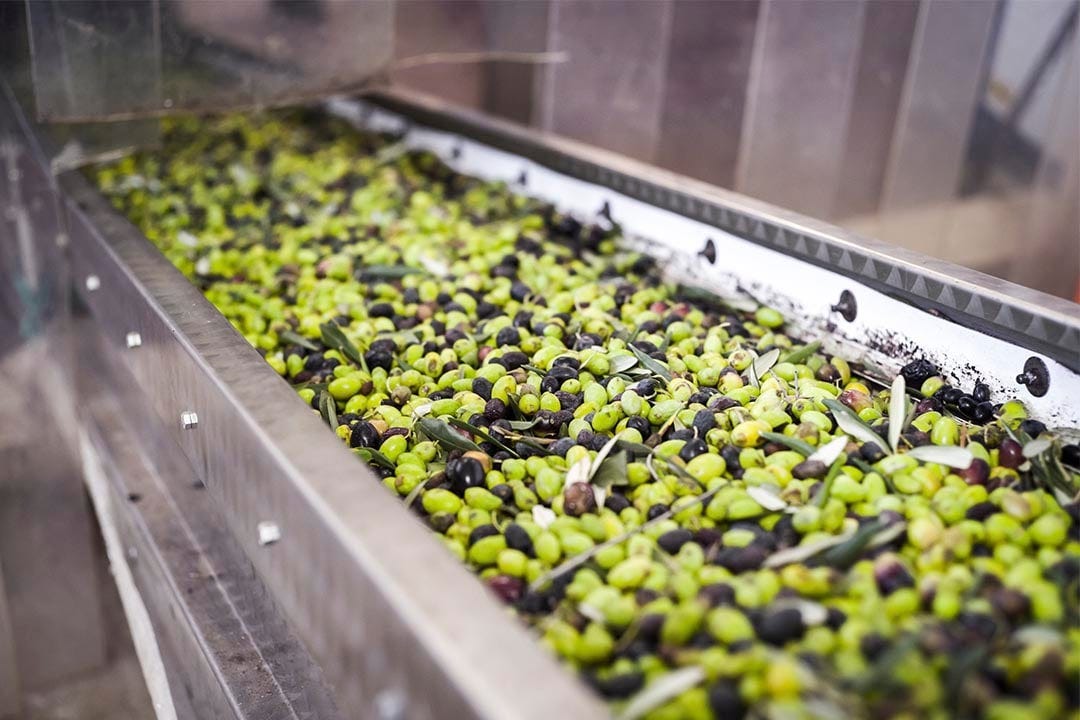
They bottle a few litres in old glass bottles to take home. The rest will be filtered, tested, and stored in dark tin barrels until January. “Oil doesn’t like light,” Spyros explains “That’s why it’s best to keep it in tins or dark bottles. Never trust any oil stored in clear glass.”
The unbroken line
Each generation tweaks the process but keeps the essence: patience and respect. “My father picked with his hands,” Tina says. “I pick with mine. If my grandson Homer use drones one day, fine - as long as they still taste before they sell.”
A week later, Ziad sends me a photograph he took while we were harvesting: the family, all together, seated under the oldest tree, bread dipped in new oil, eyes half-closed in that post-harvest calm.
Hand-picking is becoming a cultural act of resistance - a refusal to let tradition collapse under efficiency. It’s also a quiet environmental manifesto: nurture the trees that nurture you. In an era of climate anxiety, these families embody a slower truth. They don’t harvest from the land; they harvest with it. The difference is everything.
When you taste that year’s oil (green, bitter, alive) you can feel the hands that made it. You can hear, faintly, the whispering trees.
Sources