


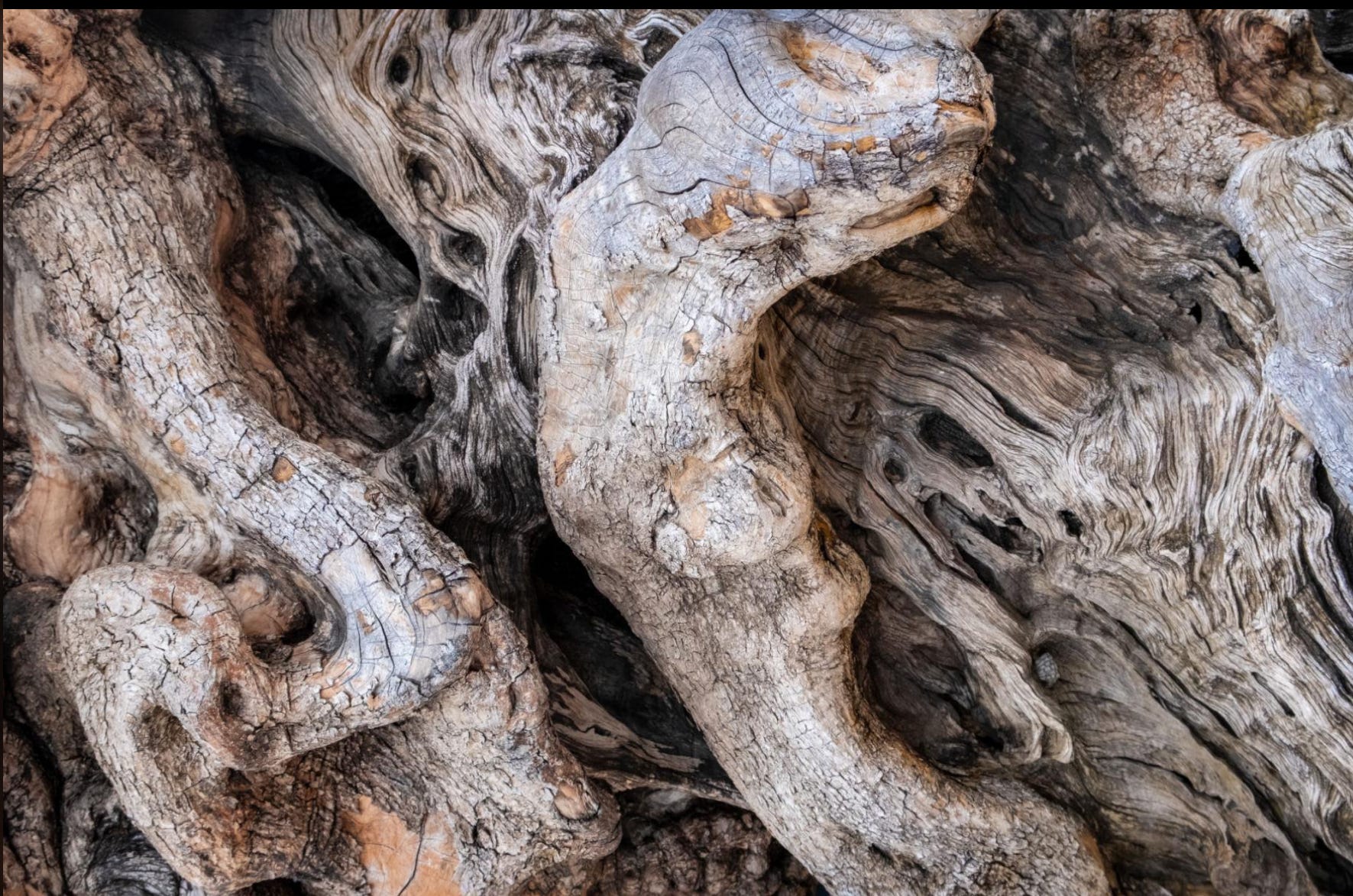
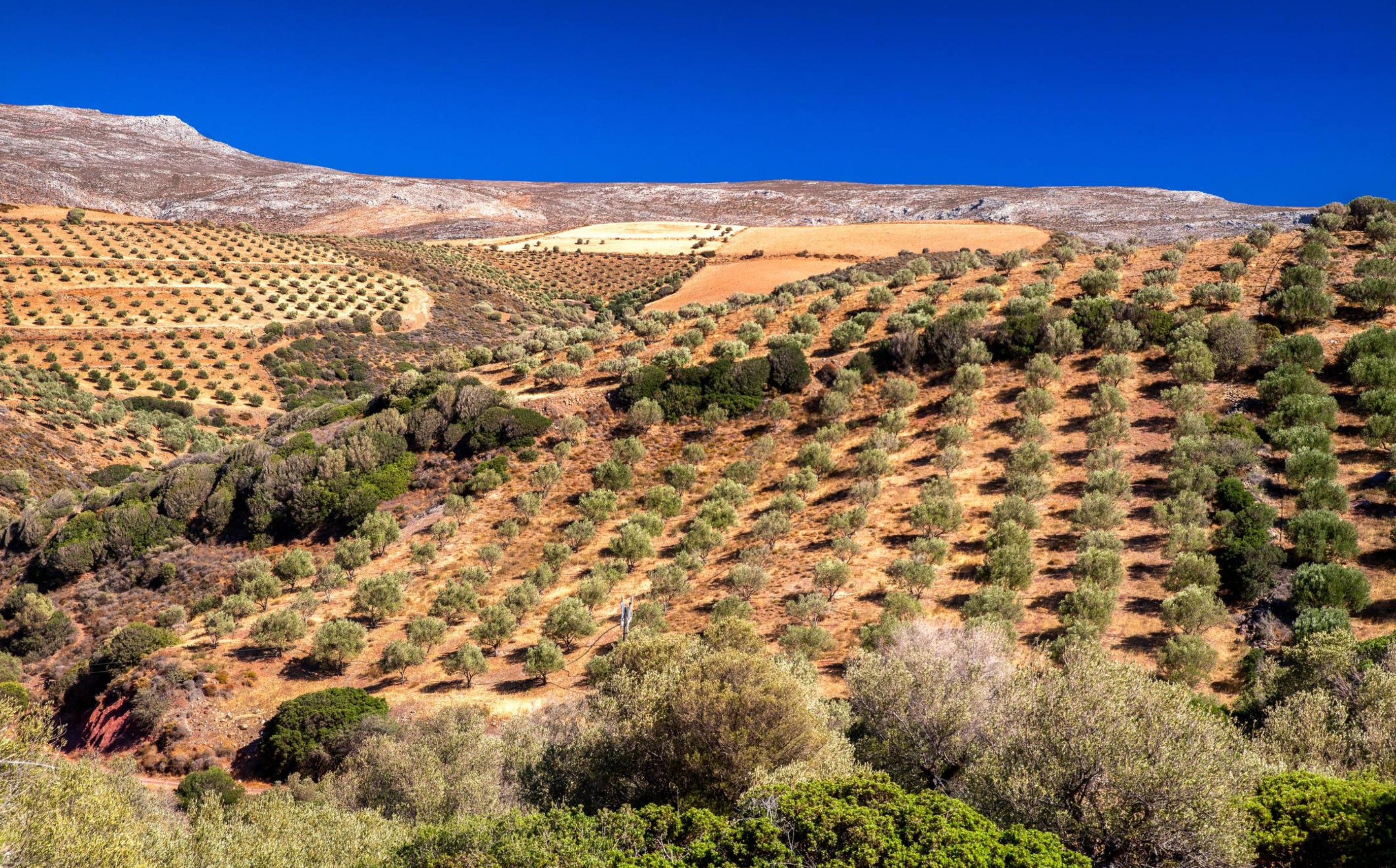
Somewhere high in the hills above Thebes, under a sky the colour of pewter, Varvara Kouneli, an agronomist friend, kneels beside an olive trunk older than Greece’ constitution. The tree is split, hollow, part fossil, part flame. “She’s one of the great grandmothers of all those trees in that field,” she says, running her hand along the bark, and pointing to the grove nestled along the hillside below.
The tree doesn’t look like science. It looks like stubbornness – grey and gnarled. It is almost skeletal. Yet inside its cells is a genetic diary six thousand years long. The olive tree remembers everything.
Olive trees were tamed on the Aegean’s rim around 4000 BC. Archaeologists at Santorini’s Akrotiri site found carbonised pits from early cultivars; later DNA analysis showed them to be near-identical to modern Greek varieties. That means the olives on your table tonight share ancestry with the fruit that fed the Minoans.
Unlike annual crops, the olive was never reinvented each season. Farmers cloned what worked - literally. They cut a branch from a proven tree, grafted it onto hardy wild stock, and passed it down. What survived became lineage.
Each grove was a kind of living library. The Minoans didn’t leave much writing, but they left DNA - vegetative scrolls planted in terraces.
Evolution by patience
Modern geneticists call this somatic mutation: slow genetic drift through centuries of stress. A lightning strike, drought, or frost might alter a single gene, producing olives with slightly thicker skins or different oil yield. The farmer, noticing the improvement, propagated that branch. Greece’s hundreds of cultivars (Koroneiki, Tsounati, Lianolia, Manaki) are all essentially time-lapse portraits of adaptation.
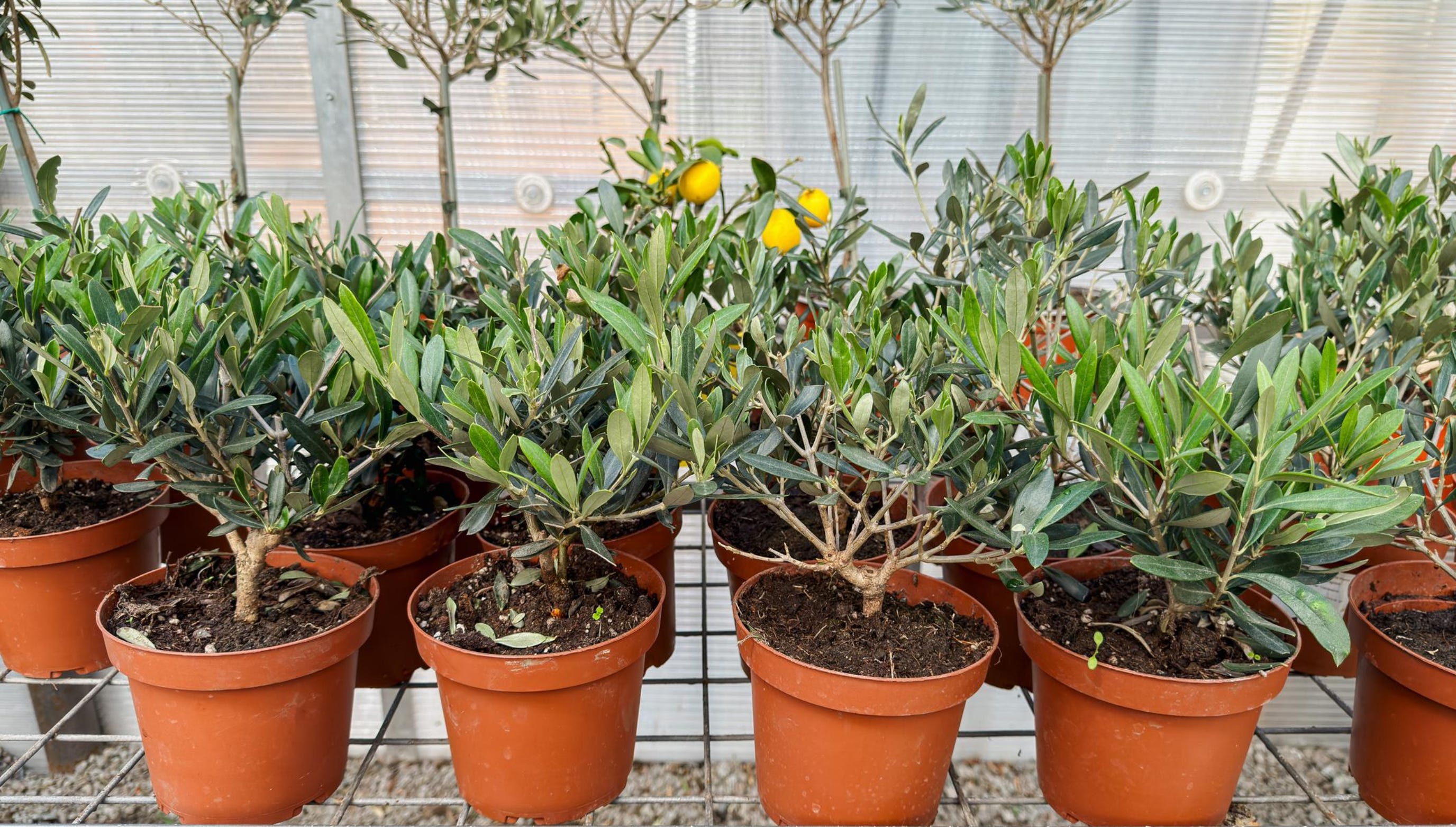
“Cloning in trees does not lead to sterile creatures. It represents evolution and survival. They’re editing themselves in slow motion,” Varvara pointing toward nearby saplings shimmering silver-green.
Did You Know?
Family reunion: DNA sequencing shows several ancient trees (including the famed Vouves olive tree in Crete) are genetically identical to modern cultivars still harvested nearby.
Extreme endurance: Olive trees can regenerate after wildfires or beheading, sprouting from hidden rootstock within a year.
Deep roots: Some roots have been dated to over 6,000 years old, continuing to feed new shoots.
Tree passports: The EU’s OliveGen project is cataloguing genetic “fingerprints” for each Greek variety - a botanical census for the future.
Greece’s relationship with its olive trees is not just about cultivation. Critically, it is also about conservation and conversation. Farmers don’t plant; they negotiate. A tree decides where it will live, twisting itself around limestone or into wind. The people respond with patience and pruning lightly.
That symbiosis has written itself into language. The Greek word ‘tharros’ (endurance) shares roots with ‘thallo’ (to sprout). Even the verb “to hope,” elpizo, carries agricultural overtones, waiting for fruit.
When scientists today sequence DNA, they’re really decoding the past and a potential future. The genes that let an olive leaf conserve water, or a root sense salt, are survival lessons from eras when the Aegean was wilder and drier than now.
At the Agricultural University of Athens, researchers maintain a greenhouse of what they call “mutant libraries.” Some trees are dwarfed, others bloom out of season. Each anomaly offers data: how olives cope with heat spikes, carbon dioxide, or invasive pests like the olive fruit fly (Bactrocera oleae). In a world heating faster than mythology, those quirks might save global agriculture.
Did You Know? (Part II)
Genetic fingerprints: Greek researchers have mapped more than 250 indigenous olive varieties, making the country a biodiversity hotspot within the EU.
Global export: Half the world’s olive genotypes contain at least some Greek ancestry, proof of ancient trade routes.
Fossil clues: Pollen samples from Lake Vouliagmeni show continuous olive presence for 50,000 years.
Future seeds: Cryobanks in Thessaloniki now store olive DNA for long-term preservation - a modern ark for ancient genes.
Ancient mothers, modern daughters
At the Vouves museum in Crete, a glass case holds cuttings sent to Olympic Games as symbols of peace. Each one is a literal piece of history - cloned from the same genetic mother that shaded Minoan courtyards. When athletes receive laurel wreaths, the olive quietly nods from the background: Remember who feeds you.
Botanically, every new tree is an old one reborn. Spiritually, too. Greece’s oldest olive trees are living metaphors for resilience - regenerating after fire, storm, empire and neglect. They remind us that survival isn’t static; it’s iterative and, sometimes, accidental.
As climate change redraws the Mediterranean map, Greek scientists believe these “ancient mothers” hold the keys to future agriculture - genes for drought tolerance, salt resistance, and disease immunity. Yet their survival still depends on farmers who prune by moonlight and curse bureaucracy more than weather.
The fusion of labour and science makes the olive a national emblem not of nostalgia but of relevance. The trees were here before us and, if we pay attention to their quiet genius, may outlast us too.
Beneath the microscope, olive DNA looks like every other plant’s - coils of carbon and possibility. But in those spirals lie stories of every empire it has outlived, and of the next generation it’s already preparing to feed.
Sources