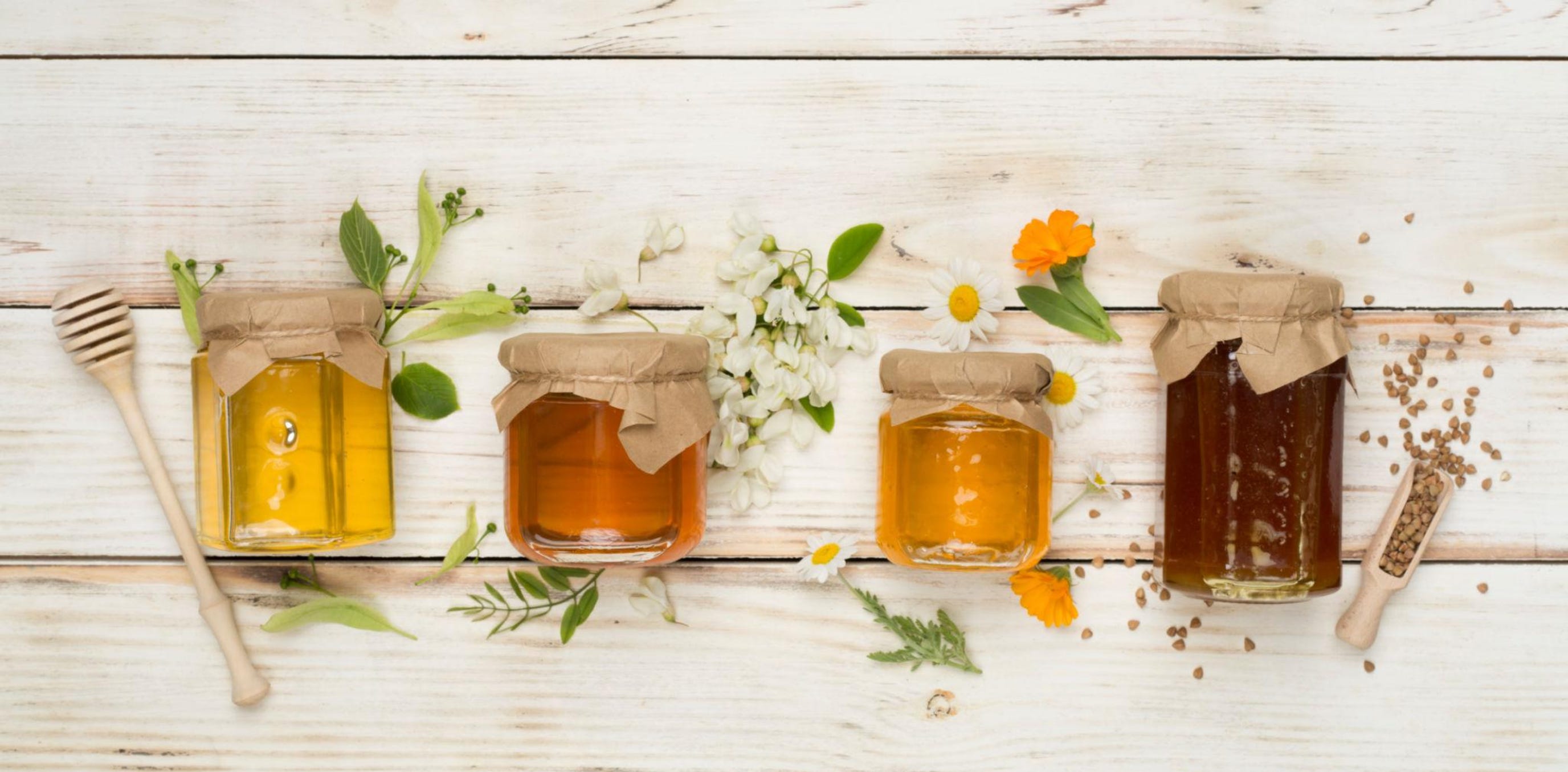
If you’ve ever eaten real Greek thyme honey, you remember it.
Not just for its sweetness (though it’s that too) but for the way it seems to glow: warm and herbal. It doesn’t taste like flowers; it smells of the land, and is the taste of sunlight in syrup form,” says Christos Skarlatos, my friend the beekeeper from Athens. “It’s a literal chemistry that is actually rather amazing.”
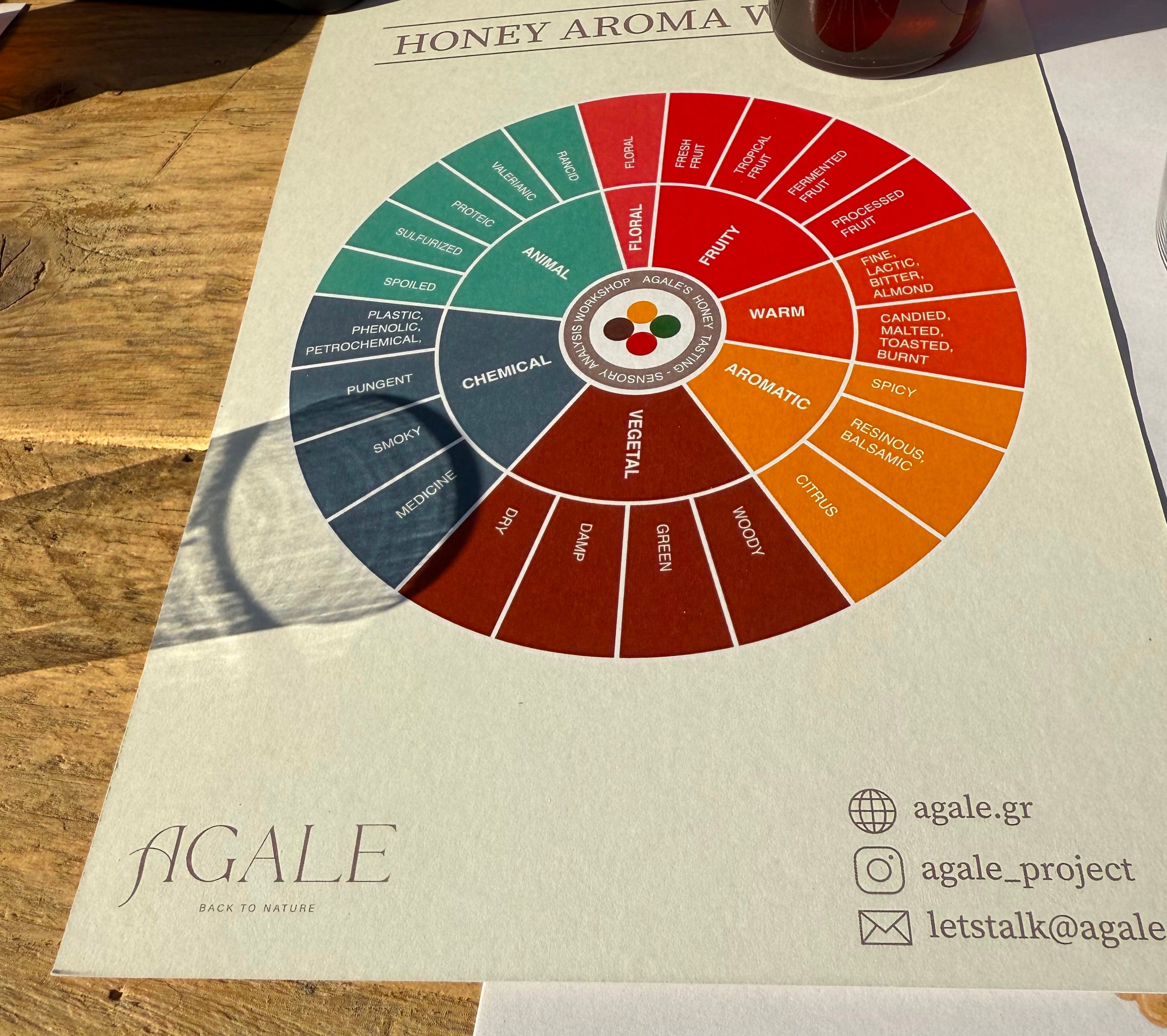
Greek thyme honey has a smell you can identify blindfolded - lemon, smoke, dried herbs, salt wind. The reason isn’t romance; it’s molecules. Every flower species produces a unique set of volatile compounds, microscopic signatures that bees collect alongside nectar.
“When a bee visits thyme,” Christos explains, “she carries home the plant’s perfume in her pollen baskets and her stomach. The hive becomes a distillery.”
The result is honey rich in terpenes, aldehydes, and phenolic acids - the same chemical families found in essential oils and fine wines. In thyme honey, the key compound is thymol, an antimicrobial terpene that smells like the hillside itself: resinous, dry, and sharp.

Did You Know?
Thymol: The same molecule used in natural antiseptics like Listerine; it gives thyme honey its medicinal aroma.
Geology effect: Thyme grows best in calcareous limestone soils, which concentrate aromatic oils.
UV factor: High sun exposure intensifies nectar volatility; wild Greek island flora produce up to 30% more terpenes than mainland varieties.
Honey as terroir: Like wine, honey’s chemistry shifts with altitude, rainfall, and microclimate.
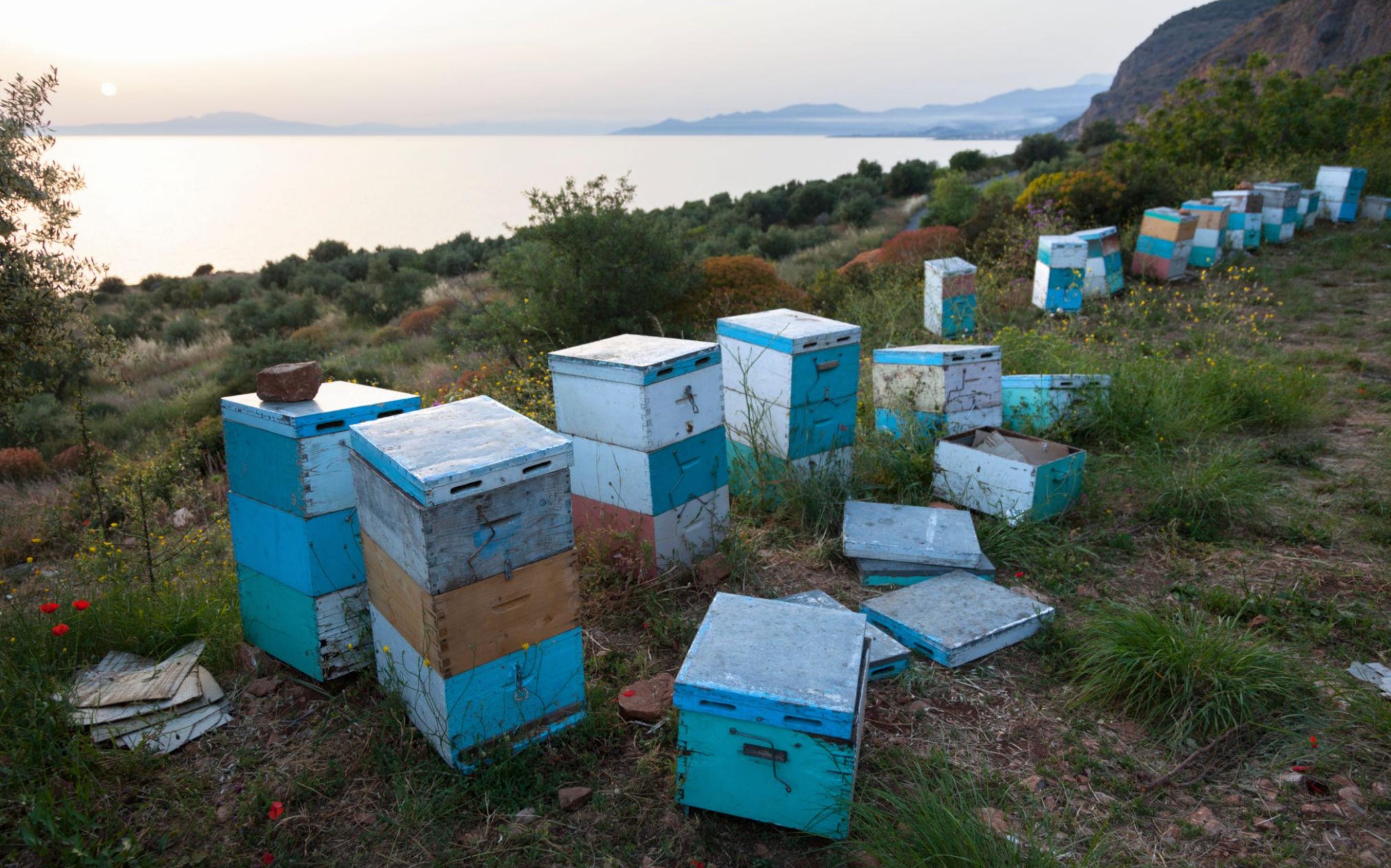
Drive through the Cycladic islands in midsummer and you’ll smell it before you see it: the scent of thyme heating on white stone, bees hovering low over purple tufts. “It’s a perfume factory,” says Christos.
“The bees are simply botting the results of plants that grow in limestone and are stress-baked by intense summer sunlight. All of this push the plants into producing defence chemicals.”
That link between geology and flavour is what scientists now call the “lithos-floral effect.” In Crete and Nisyros, volcanic minerals add faint smoky and metallic notes, while in the Cyclades, the salt spray adds a briny lift.
“Even blindfolded, you can tell an island honey from a mainland one,” he says.
The chemistry of beauty
Honey’s aroma compounds form during two stages: floral biosynthesis (in the plant) and enzymatic transformation (in the hive). Bees add enzymes and glucose oxidase to nectar, turning it into a living chemical laboratory.
Over days, these reactions release aldehydes like benzaldehyde (almond scent) and phenylacetaldehyde (rose and honey notes). “Each drop,” says Christos, “is an orchestra of carbon rings playing in tune.” Modern gas-chromatography has identified more than 180 volatile compounds in Greek thyme honey, more than in most white wines.
Did You Know? (Part II)
Aromatic top notes: Linalool (floral), thymol (herbal), and hotrienol (citrus-fresh) dominate Greek thyme profiles.
Antimicrobial strength: Thymol and carvacrol give thyme honey natural resistance to spoilage.
Crystallisation clue: High-thymol honeys stay liquid longer - a natural preservative.
Colour chemistry: Iron and manganese in volcanic soils deepen hue from gold to amber-red.
The ancient Greeks didn’t know about terpenes, but they understood magic by another name. Honey was the food of gods, the literal nectar of Olympus. Aristotle wrote that thyme honey was “strongest and most fiery,” good for the chest and soul. In Homeric myth, bees fed Zeus himself while hidden in a Cretan cave.
At the University of Crete’s Honey Aromatics Project, researchers now compare gas-chromatograms of wild thyme honey to its cousin plants: oregano, sage, marjoram. Each shows a fingerprint of peaks - thymol here, linalool there, geraniol rising like a heartbeat. They’ve found that bees feeding on mixed herbs produce honey with synergistic compounds — literally flavours that don’t exist in any single flower.
To taste this transformation, Christos offers a lab trick: warm a teaspoon of thyme honey gently between your palms and inhale. You’ll smell rosemary, citrus, and sea air. “That’s what’s known as ‘volatile release’, a process which, put simply, leads to foods releasing their aroma,” he says. “The same molecules perfume Greek soap and protect your throat.”
Each Greek region has its own aromatic signature:
Thymus capitatus (Cyclades): Intense, peppery, resinous.
Satureja thymbra (Peloponnese): Softer, herbal, with minty edges.
Thymus longicaulis (Crete): Floral and smoky, hints of citrus peel.
These are not mere varietals; they’re microclimates distilled. “Taste enough honeys,” Christos says, “and you can map Greece with your tongue.”
Did You Know? (Part III)
Volatile count: Up to 200 aroma compounds recorded in high-grade thyme honey.
Stress bonus: Drought increases phenolic intensity - adversity makes the honey tastes better.
Heat stability: Terpenes survive mild heating; boiling kills them.
Memory link: Thymol activates olfactory receptors tied to emotion, hence nostalgia in a spoon.
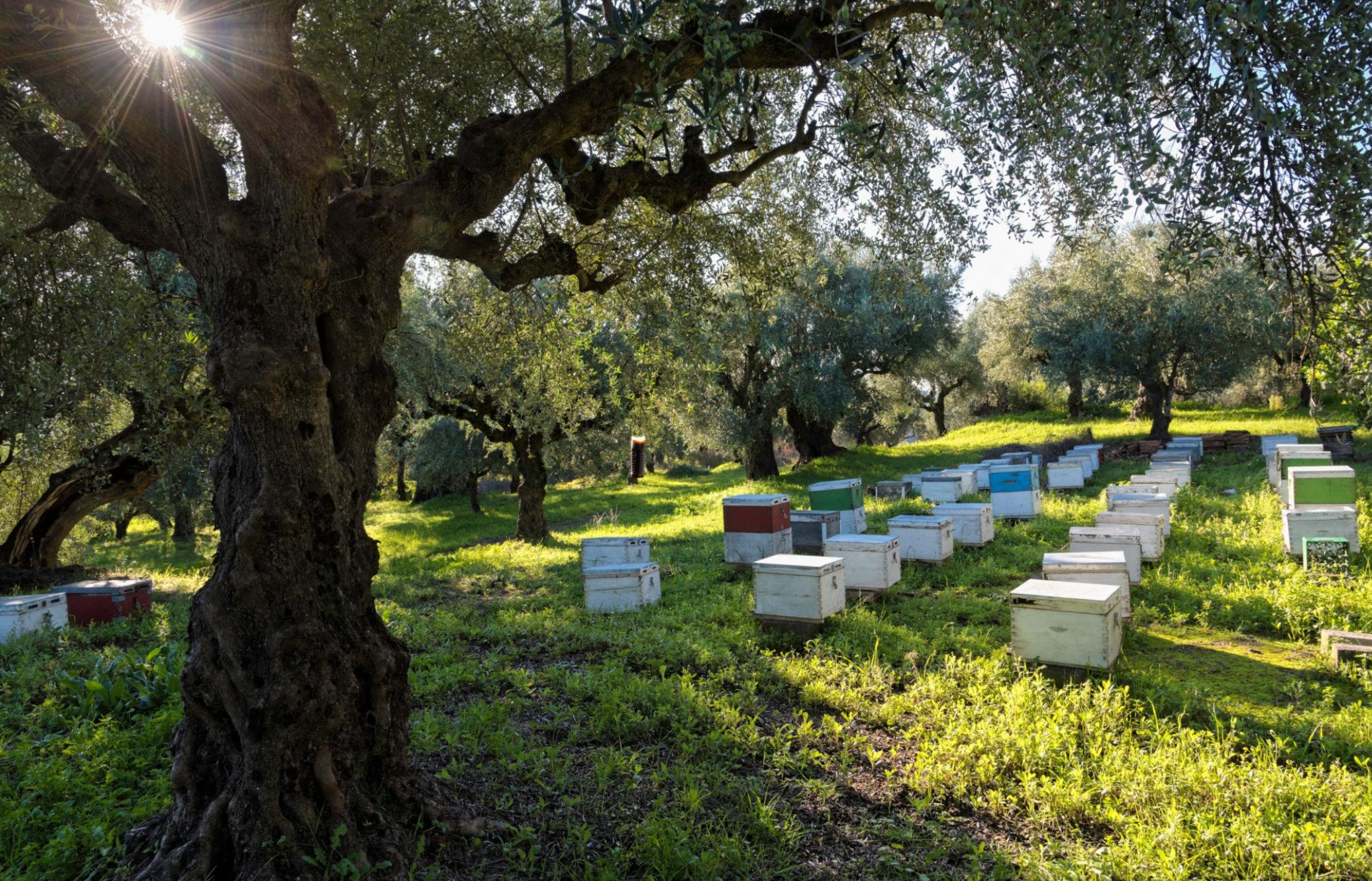
On a rocky field, under olive trees on my farm, Christos opens a hive at dusk. The air smells of thyme and the nearby vines. He lifts a comb glistening amber, holds it to her nose, and inhales. “It smells like the old gods still live here,” he murmurs.
Back in my farm kitchen, he jars the honey and writes by hand: ‘Pure Thyme. Summer 2025.’ Each label, he says, is a message in chemistry - proof that sunlight and limestone can still be tasted.