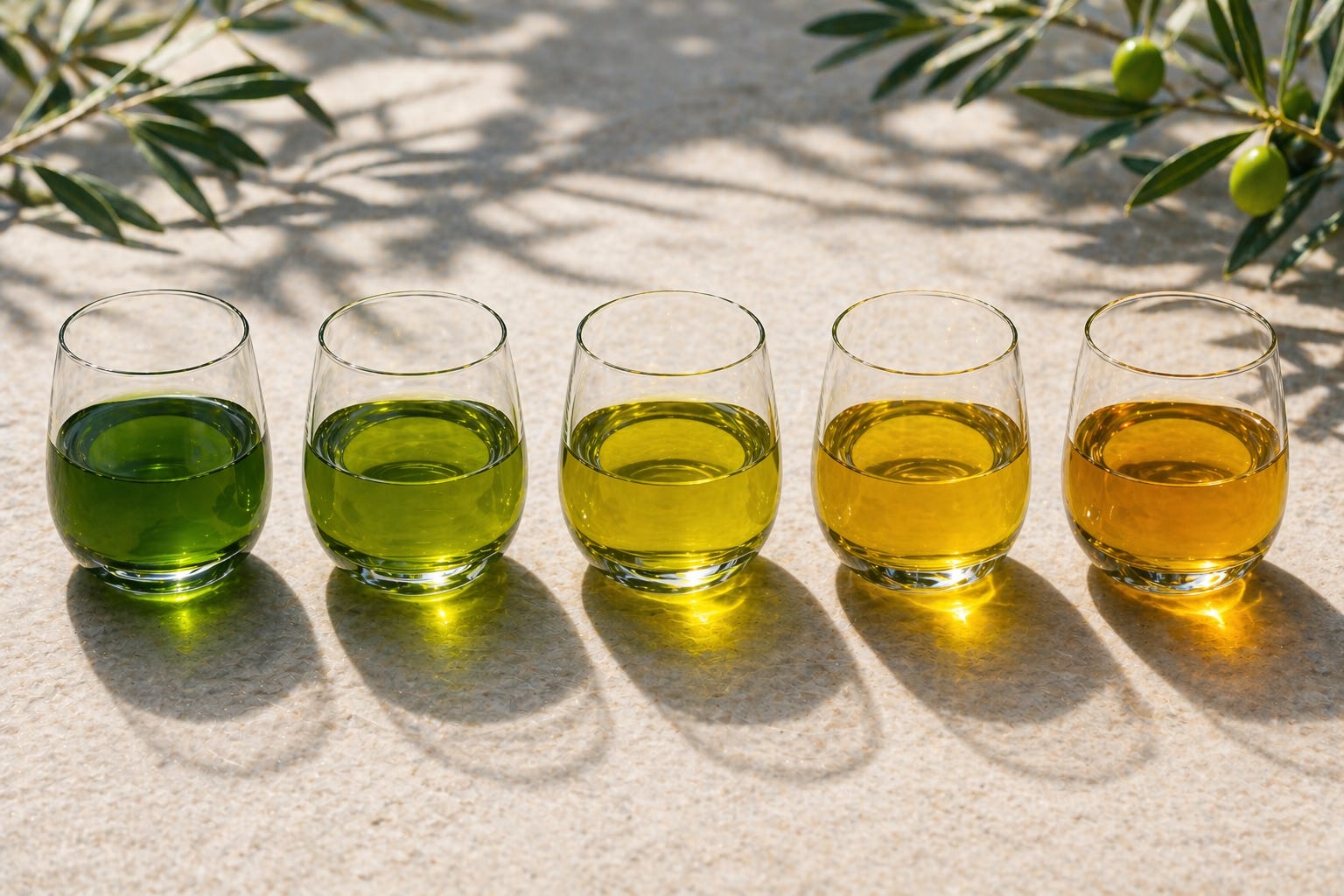
If you drink olive oil for breakfast in parts of Greece, nobody laughs.
Old men in the cafés still tip a tablespoon down before coffee, muttering “gia tin ygeia” (for health) then chase it with a slice of bread. It’s not a wellness fad. It’s a ritual that predates medicine itself.
The bitter burn at the back of the throat (that signature bite of good Greek oil) isn’t a flaw. It’s chemistry announcing itself. That sting is the taste of molecules at work: polyphenols, tiny antioxidants that link a fruit to the idea of immortality.
The ancients already knew. Hippocrates prescribed olive oil for ulcers, wounds, and melancholy. Galen measured its “warm” temperament and called it “the great pacifier of the body.” Athena’s olive tree, offered to Athens as a gift of peace, was also an apothecary.
For centuries, these insights were anecdotal; faith, not fact. But in 1999, a Spanish researcher named Dr. Gary Beauchamp discovered that the throat-sting of Greek oil mirrored the burn of ibuprofen. He traced it to a phenolic compound called oleocanthal, which inhibits the same inflammation pathways as modern painkillers.
What are polyphenols, really?
Polyphenols are a vast family of plant chemicals that defend fruit from stress, pests, and sunlight. In humans, they act as antioxidants and anti-inflammatories. Olive oil is loaded with them - particularly the compounds oleuropein, hydroxytyrosol, and oleocanthal.
When you taste that peppery hit, you’re literally experiencing the olive tree’s immune system lending you its strength. That bite or bitterness equates to medicine. The same molecules that make people wince also make them live longer.
Did You Know?
EU health claim: Olive oils with over 250 mg/kg polyphenols can legally claim “contributes to protection of blood lipids from oxidative stress.”
Age factor: Polyphenols decline as oil ages, fresh-pressed is always healthiest.
Harvest timing: Early-harvest green olives can contain up to five times more polyphenols than late-harvest black ones.
Varietal boost: Greek Koroneiki olives are among the richest in phenolic content worldwide.
The taste of longevity
To understand the Greek paradox (why locals eating high-fat diets have some of Europe’s lowest heart disease rates) you have to taste their oil fresh from the press. It’s viscous, almost spicy, smelling of tomato leaf and artichoke. One sip and you cough. That cough, locals say, is “the sound of health.”
In Ikaria (the so-called “island where people forget to die”) villagers drizzle everything with early-harvest oil. It is reported that one 97-year-old resident, Panayiota, still makes her own each November. She insists that not only is the oil used for food, it acts as a salve for wounds, baby rashes, eczema and much more. Seemingly, for many across the mediterranean, there is little it cannot cure.
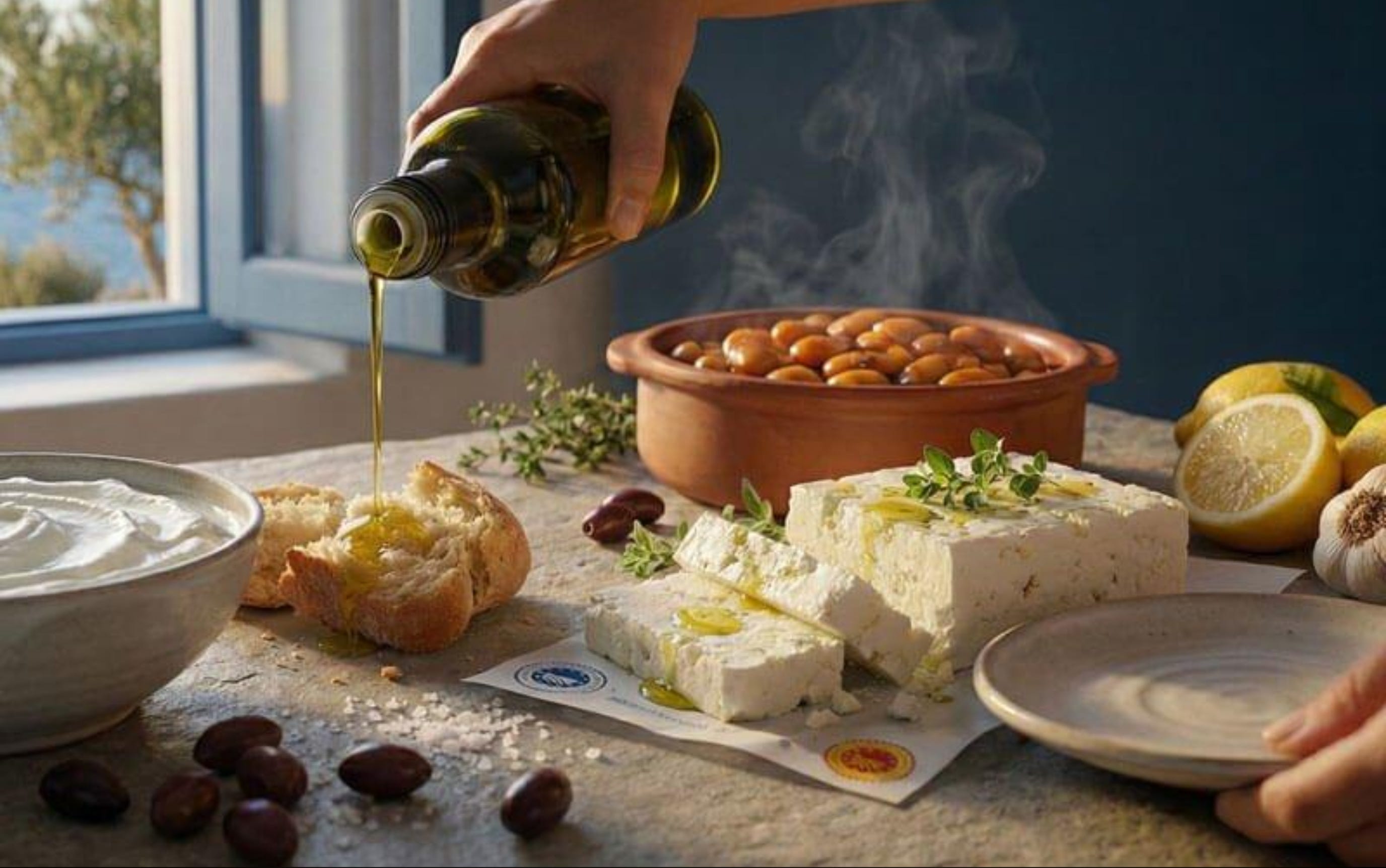
Modern studies now confirm what the ancestors of modern Greeks intuited – that these oils behave like nutraceuticals; foods that act like medicine.
Regular consumption of high-polyphenol olive oil has been linked to:
Reduced risk of cardiovascular disease (PREDIMED Study, Spain, 2013)
Lower rates of Alzheimer’s (Temple University, 2017)
Improved gut microbiome balance (University of Athens, 2021)
Anti-cancer and anti-inflammatory effects (Harvard T.H. Chan School, 2022)
In 2023, Greek scientists developed a “phenolic index” allowing producers to measure their oil’s potency. Some boutique brands now label bottles with milligrams of oleocanthal per kilo - as proudly as vintners list alcohol content.
Did You Know? (Part II)
Healing history: Ancient Olympic athletes drank oil before competitions as a stamina elixir.
Cooking myth: Polyphenols degrade under heat, but good oil retains over 80% of its antioxidants even when fried.
Global envy: Japanese researchers are studying Greek olive phenols as potential longevity drugs.
Shelf-life secret: Store oil in dark glass or steel — light destroys polyphenols faster than time.
The bitterness problem
Ironically, the very oils richest in polyphenols are hardest to sell. Many consumers still equate bitterness with defect. Supermarkets prefer mild, buttery blends that sit comfortably on pasta - not the assertive green fire of an early Greek press.
“Marketing has trained consumers to prefer milder oils, seeking flavour that is easy on the palate. But that has the consequence of killing the powerful medicinal effect of olive oil.” says my cousin Ziad, who co-owns the cold press mill our family operates.
In response, some Greek producers are re-educating palates through olive oil tastings, teaching people to swirl, sniff, sip, and savour the cough. “We shouldn’t be apologising for that spicy bite you get from really good olive oil. It’s part of the terroir.” says Ziad.

Professional tasters describe three traits: fruitiness, bitterness, and pungency. The balance defines quality - like acidity in wine. At official panels, tasters sip from cobalt-blue glasses (to disguise colour bias), warm the oil in their palms, and inhale deeply.
They talk of “green apple,” “rocket leaf,” “almond,” and “fresh-cut grass.” But the poetic words mask a hard truth: the stronger the bite, the greater the health benefit.
As global olive groves face drought and disease, polyphenols are not just nutrients — they’re clues to resilience. Trees under stress produce more of them. “The harder the terrain, and the lower the rainfall, the stronger and ore pungent the oil.” Explains Ziad.
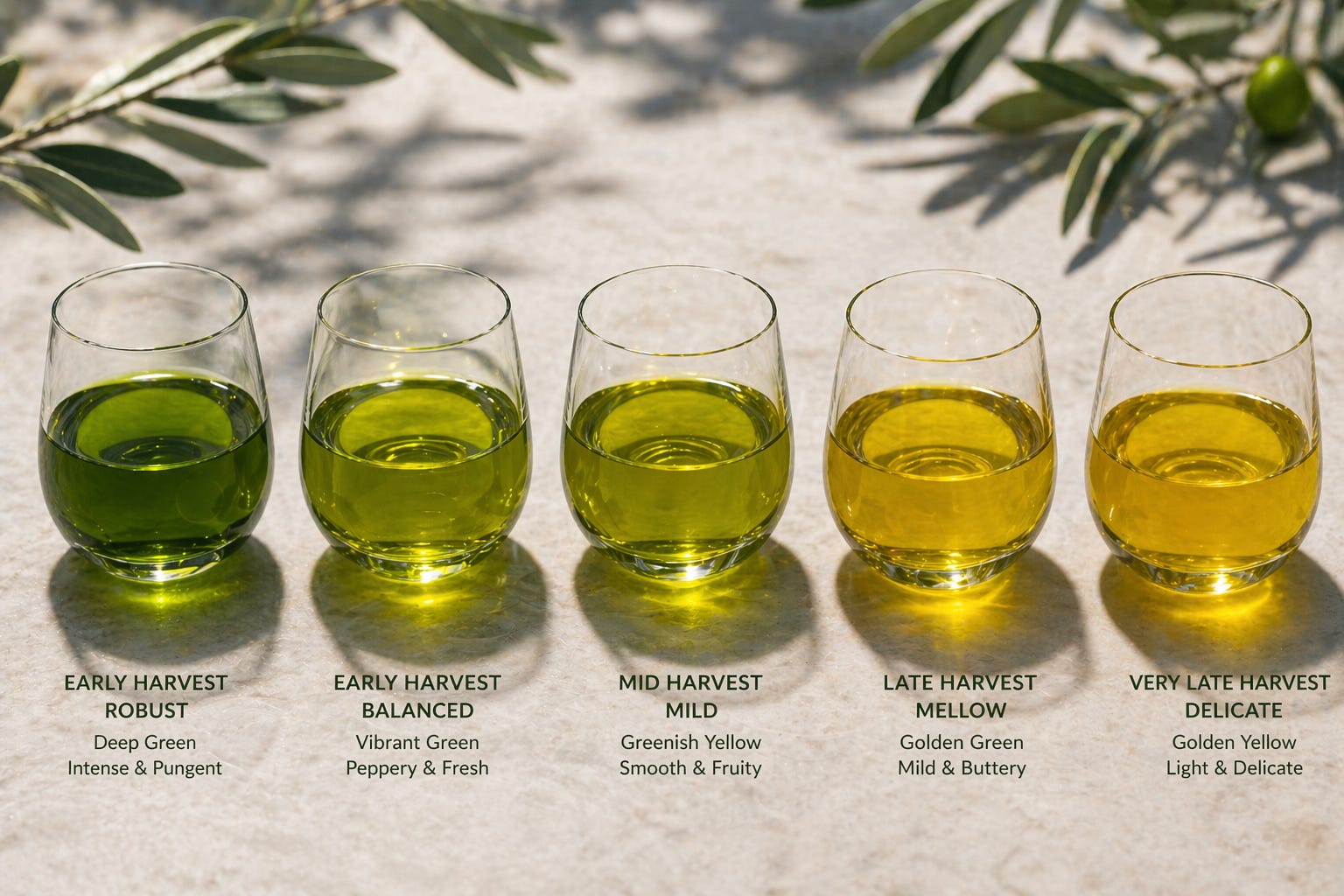
That, perhaps, explains Greece’s unique flavour profile: a country of rocky soils, fierce sun, and stubborn farmers. Bitterness, in both life and oil, becomes a virtue.
Epilogue: The taste that heals
Back in Crete, Panayiota is known to finish her morning ritual: a spoonful of last season’s oil, a sip of water, a smile. She doesn’t count years, but harvests. The bitterness lingers, metallic and alive. It’s the flavour of endurance - of a tree that thrives in drought, of a people who believe that the body, like the grove, heals itself if tended daily. Science calls it oleocanthal. Locals calls it faith.