



It begins with a cough.
If you’ve ever watched a professional olive oil tasting, you’ll see the experts line up like scientists — cobalt-blue glasses, clipboards, silence. They swirl, sniff, slurp noisily, and then cough into their elbows. Far from being bad manners, that peppery tickle is proof of quality. The Greeks call it pikantiko — the bite that means life.
“Good quality, extra virgin olive oil should not taste bland,” says my cousin Ziad as we taste the different oils we have milled from local farmer’s trees. “If it doesn’t have a sharp bite, a peppery scratch as it hits your throat, it’s dead. Put simply, it’s low quality oil.”
Wine has its rituals, coffee its cupping, but olive oil the Mediterranean’s oldest luxury) is still mostly gulped unnoticed. Yet the ancient Greeks were natural sommeliers. Aristotle wrote about aroma; Athena’s priests graded oil for purity. In Homer’s Odyssey, Odysseus anoints himself with “shining oil,” a sensory gesture of wealth and vitality.
Today, Greece produces some of the world’s finest extra virgins, but only a fraction of consumers can tell one from another.
“We’ve become desensitised, losing our sense of what good tastes like. You could say we’ve lost the senses that help us see, smell and taste what good quality is,” Ziad says, pouring a tasting sample the colour of spring. “Olive oil is not something that just makes the pan not stick.”
How to taste like a pro
The process is surprisingly meditative, closer to mindfulness than gastronomy.
Warm the glass. Professional tasters use dark blue cups so colour doesn’t bias judgment. Hold it in your palm to bring the oil to body temperature.
Smell first. Swirl gently, then inhale. Fresh oil should smell alive - green grass, tomato leaf, artichoke, almond, even banana. Rancid oil smells of wax, vinegar, or cardboard. “If it smells like your grandmother’s cupboard,” says Ziad, “it’s too old.”
Slurp audibly. Draw air through your teeth so oxygen releases volatile aromas. You’ll look ridiculous but taste everything: bitter first, fruit second, pepper third.
Note the cough. One cough means it’s lively oil. Two indicates high polyphenols. Three means you’re talking about the highest quality. “If the oil doesn’t make you cough, you might as well leave the oil to someone with less discerning taste,” Ziad says.
Did You Know?
Pepper power: The compound oleocanthal causes the throat tickle, the same anti-inflammatory molecule found in ibuprofen.
Blue glass rule: Judges use opaque cups because colour varies naturally by variety and harvest stage, green doesn’t always mean better.
Freshness test: Real extra virgin lasts about 18 months before oxidation dulls flavour.
Olfactory memory: Humans can distinguish over 200 aromatic notes in olive oil, more than in wine.
The Greek spectrum
Each region has a signature. Koroneiki oils from the lands around Thebes and across the Peloponnese are bold, peppery, herbal. Tsounati from Crete is rounder, buttery, often with hints of wild oregano. Lianolia from Corfu is grassy and floral.
Zias lines up tasting glasses on the table. “You can travel Greece with your taste buds – and your nose.”
The first smells like cut tomato vine and apple skin. The second (darker, denser) suggests walnut and earth. The third bites back sharply, leaving a sweet echo. “That one,” he says, “makes the throat sing.”
Professional tasters borrow words from every corner of the pantry: grassy, nutty, floral, bitter, metallic. Yet Greek tasters often use emotion instead. Thalassino (“of the sea”), anemos (“windy”), zesto (“warm-hearted”).
At a tasting session at the Attican, our farm estate, I watch participants argue not about notes but personalities. “This one is careful, a little introverted or shy.” “That one is really argumentative – it wants to fight you. It’s my ex-husand in oil form.” Everyone laughs, but there’s truth in it - olive oil is expressive because it’s alive.
Ziad uses the ancient term that many Greeks still do when referring to the character of olive olive, ‘psychi tou karpou’ or “the soul of the fruit.”
Did You Know? (Part II)
The cough scale: International tasting judges rate pungency by intensity of the throat reaction, a playful but measurable metric.
Regional champions: Greece produces 80% of its oil as extra virgin - the highest proportion in the world.
Food pairing: Bitter, pungent oils cut fat in grilled meats; milder, fruity ones complement salads and fish.
Storage secret: Always store oil in dark glass or tin, away from heat and light; plastic accelerates oxidation.
Across Greece, olive-oil tastings are becoming the new wine tours. Visitors to Messinia, Crete, and Lesvos book “liquid gold experiences,” swirling oil like cabernet and learning to decode bitterness as beauty.
At the tasting, a second group of tourists from the UK and Germany stands in reverent silence, sniffing glasses. The guide invites them to describe what they smell. “Grass,” one says. “Rain,” says another. A child pipes up: “Olive oil!” The room erupts in laughter. But one person combines the essence of olive oil, “It tastes of a mediterranean summer.”
That, Ziad says later, is the perfect answer. “Oil is a food that reflects the ground the trees are planted in, the rain they’re watered with and, most importantly, the abundant, sometimes aggressive, sunshine of our land.”
The Greeks always linked flavour with morality. Sweetness was youth; bitterness, wisdom. To taste both was to understand balance. When Athena gave the olive to humankind, she gave not just nourishment but discernment — the ability to tell what is alive from what is lifeless.
Tasting olive oil today is a small act of remembrance. It connects you to the grove, the press, and the people who still listen to the trees before they harvest.
The ritual at home
Ziad’s advice for everyday tasting is simple:
Buy small, buy fresh. Avoid dusty bottles at the back of the supermarket.
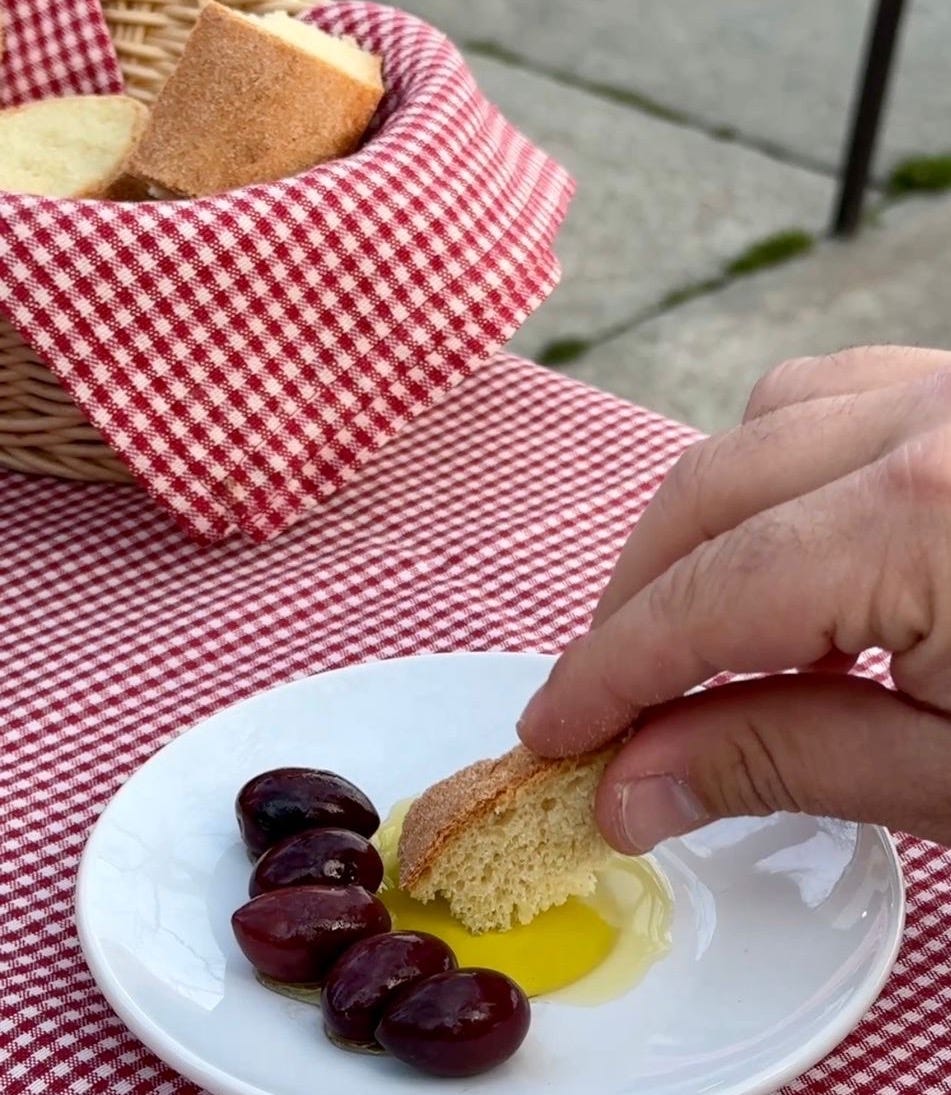
Taste before you cook. A drizzle on bread tells you everything about that year’s weather.
Trust the cough. Your throat is the only lab you need.
Every December, he and his old school friends gather at dawn in the groves for the season’s first tasting. Wrapped up warm against the cold winter chill, they bring bread, tomatoes, salt, and a bottle from the previous year. They pour the new oil into small cups, inhale, taste, cough, and laugh.
“It’s not about being pretentious,” he states. “This is about being intentional, paying attention spending time to observe, taste, experience.”
Next time you pour olive oil, pause. Swirl it in a spoon. Smell the grass, the sun, the earth. Remember the hands that picked those olives, the donkey that turned the mill, the cough that proves it’s alive.
Sources
Love this!