


It starts, as so many Greek stories do, with sunlight. The kind that bleaches stone and hardens earth. A sunshine that makes anything that survives here a minor miracle. Out of that stubborn soil grew two obsessions (olives and honey) and together they shaped an entire civilisation.
Long before quinoa was branded and kale canonised, ancient Greece had already built the world’s first superfood economy. Every meal, ritual, and piece of trade somehow flowed back to those two substances: the oil that burned clean and the sweetness that didn’t rot.
In the eighth century BC, most Greeks lived close to subsistence. Grain harvests failed; droughts were routine. But the olive tree and the honeybee didn’t care. They thrived on neglect and thin air.
From Crete to Corinth, every hillside held a few olive trees, every valley a line of hives. The combination kept famine away. Olive oil gave calories, fat, and light. Honey offered sugar and healing. They were portable, long-lasting, and endlessly tradeable.
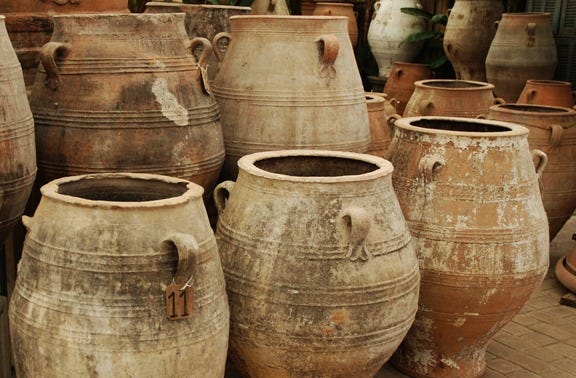
Archaeologists reading the Linear B tablets of Pylos have found both listed as state assets. Palaces taxed oil and honey like currency - the Bronze Age version of national reserves. One jar of honey from the Attican region surrounding Athens could buy a goat; ten amphorae of oil, a house.
A household economy built on taste
The Greek word ‘oikonomia’ (from which we get “economy”) literally meant household management. In practice, it was the art of combining crops that cared for each other: vines shaded hives, hives pollinated olive groves, goats trimmed weeds.
This system wasn’t romantic; it was efficient. No waste, no monoculture, just coexistence. Even the by-products (olive leaves for animal feed, wax from hives for candles) formed part of a closed loop. Modern sustainability looks suspiciously ancient.
Did You Know?
Ancient data: The Linear B tablets from Pylos list more than 30 types of olive oil by grade and use - perfumed, sacrificial, culinary.
Honey currency: At Knossos, jars of honey were sealed with palace stamps and used for rations; the Minoans may have invented the first “food label.”
Greek pantry maths: A household with 50 olive trees and 20 hives could feed an extended family indefinitely - a Bronze Age food-security model.
Hippocrates, the father of medicine, prescribed olive oil for wounds and honey for the stomach. Plato’s Republic banned rich sauces but praised oil as civilised moderation. Modern nutritionists would nod: monounsaturated fats meet antioxidants in a balanced diet.
What’s striking is that the Greeks intuited this without lab coats. They ate simply because simplicity worked. Bread, olives, cheese, honey - the Mediterranean diet before it was marketed in glossy lifestyle magazines.
Recent research from the University of Crete’s Nutrition Lab shows that traditional olive-honey pairings still deliver a nutrient density unmatched by most modern superfoods. Polyphenols and flavonoids: the ancient anti-inflammatories.
Trade routes of light and sweetness
By 600 BC, Aegean ports glistened with amphorae. Olive oil sailed to Egypt and Syria; honey travelled north to Thrace and Italy. Each shipment was sealed, branded, and taxed. Athenian merchants built fortunes not on silver mines but on flavour.
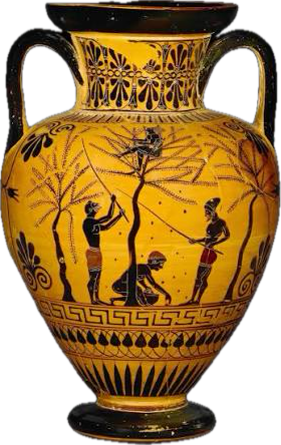
In the agora, you could pay your debts with oil, bribe officials with honey, and buy love with both. A wedding feast without them was a public embarrassment.
When archaeologists unearthed amphora fragments in Marseille bearing ‘Attican’ stamps from the Athenian region, they found evidence of the first global brand: Athens - product of divine origin.
Mythology reinforced the business plan. Zeus himself was raised on honey and goat’s milk in a cave on Crete. The nymph Melissa taught humans beekeeping; Athena gifted the olive. Food and faith shared a marketing department.
In the Orphic Mysteries, initiates drank milk and honey to symbolise rebirth. The afterlife was called the “land flowing with milk and honey.” Meanwhile, olive oil anointed the dead - an eternal preservative.
Immortality, in other words, had a flavour profile.
Did You Know? (Part II)
Cross-pollination: Bees increase olive yields by up to 15%. The ancients noticed - and planted groves near wildflower slopes.
Economic reach: By the 4th century BC, olive oil made up nearly half of Athens’ exports by value.
Military ration: Spartan soldiers carried honeycakes and olive paste - a portable diet of energy and salt.
By the classical period, these two ingredients underpinned everything that defined Greek identity. Temples were built with olive oil revenues. Philosophers met in shaded groves thick with bees. The economy of necessity had evolved into a culture of taste.
Olives and honey turned agriculture into - — the first time flavour was tied to virtue. Greeks spoke of sophrosyne, the ideal of balance and self-control. Their diet mirrored their philosophy: rich enough to sustain, restrained enough to teach humility. It was the modern world’s obsession with Nordic hygge living, but with a distinctly sunnier and warmer setting.
The long, sweet aftertaste
Fast forward 2,500 years and Greece still exports the same goods. Supermarket shelves in London or Tokyo now carry jars of “Cretan Honey” and “Greek Extra Virgin Olive Oil.” The labels promise antioxidants, heritage, authenticity - the same selling points the ancients inscribed on clay.
At the Kadmus olive mill I and my cousin Ziad co-own, stainless steel replaces stone, but the sound - that rhythmic crush, the slow drip of liquid gold - hasn’t changed. A beekeeper nearby sells thyme honey to tourists who quote Aristotle on bees without irony.
The world has caught up to what Greece always knew: the good life begins in patience, sunlight, and small miracles that endure.
When the ancients poured honey into oil to preserve fruit, they called it ‘glyka’, sweetness. The word survives in today’s pastries and in the temperament of the people who make them.
Perhaps civilisation’s first lesson was simple: wealth is what keeps you alive through winter. Olives and honey did that, generation after generation, while empires rose and fell around them.
That the central essence of ‘Beyond the groves’ – a series of love letters dedicated to Greek olive oil and honey. Exploring the cultural, economic and historic role they play today, and for millennia of Mediterranean human existence. Understanding their flavours and aromas, their culinary and utilitarian uses. Delving into the myths surrounding their production and marketing. But most of all, looking at the real lives of the people involved in bringing the world the finest extra virgin olive oils and honeys.
Sources