


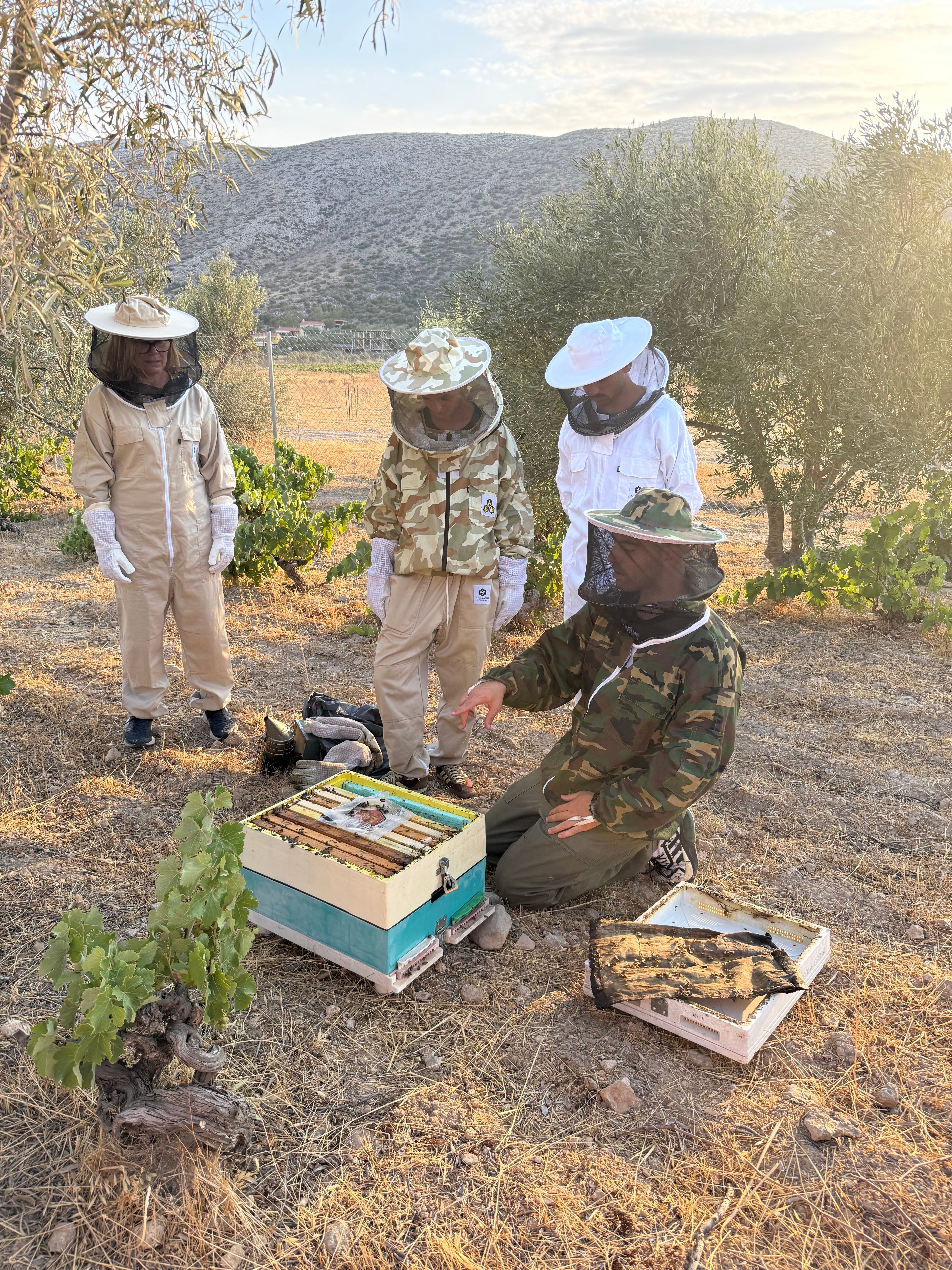
On a late summer morning in a field on my farm along the coast from Athens, a group of Londoners stand wearing white veils and holding honeycombs that tremble with life.
“Bees can literally sense their environment. It’s important you don’t rush around them,” says beekeeper Christos Skarlatos, lifting a frame alive with amber light. “They see calm today. heartbeat, so don’t rush.”
One of the guests, Tessa, a lawyer who splits her time between London, Greece and Israel, takes a deep breath. “This,” she says, “is better than therapy.”
Welcome to bee tourism - Greece’s newest, strangest, and perhaps most soothing form of luxury travel.
Once, wellness travel meant yoga in Bali or detox in Tuscany. Now, it means putting on a beekeeper’s suit in a field 30km from the busy streets of Athens and listening to 50,000 insects hum in perfect harmony. “People come to forget their inboxes, their Zoom calls and all the stresses of their lives,” Christos laughs. “They leave with honey and something else, something simple. I think it’s partly wonder – at how such a small creature makes such a profound difference to our lives.”
The movement began quietly around 2018 when small apiculture farms in Crete and Evia began hosting visitors for half-day “bee experiences.” It has since evolved into a thriving micro-economy. According to Greece’s Ministry of Tourism, bee-related retreats grew by 60% between 2020 and 2024, outpacing even wine tourism.
“It’s mindfulness with wings,” explained Eleni Parisi in an online interview last year. She is the founder of The Bee Sanctuary, a boutique eco-retreat near Kalamata and is passionate about the impact of bees on human wellbeing.
Did You Know?
Bee tourism boom: Over 45 farms in Greece now offer bee-centric stays, from rustic cabins to five-star eco-lodges.
Pollinator power: Bees pollinate 75% of Greece’s flowering plants - including thyme, sage, and citrus.
Honey diplomacy: The EU funds “bee wellness” projects in rural areas to promote biodiversity and slow urban flight.
Global appeal: 30% of visitors come from northern Europe, where bees are symbols of sustainability and resilience.
At The Bee Sanctuary, mornings begin with “api-meditation” - a guided breathing session beside an open hive. The vibration, say practitioners, helps lower blood pressure and anxiety. “It’s like a natural sound bath,” Parisi explains.
Guests then learn to light smokers, harvest honey, and identify queens. Lunch is local: salads with wildflower honey vinaigrette, feta drizzled in pine honey, herbal tea from bee-pollinated plants. “By day three, they’ve stopped checking their phones,” Parisi says. “By day five, they’re talking about starting their own hives – maybe in places like Hackney or on a roof in downtown Berlin.”
Back to the land (and lungs)
The trend dovetails with Greece’s broader eco-tourism revival - part sustainability, part therapy. After the pandemic, urban Europeans began seeking “purposeful nature.” Beekeeping offered a rare combination of risk, ritual, and reward. “It’s tactile and slow,” comments Dr. Sofia Lekatsas, an environmental psychologist from the University of Athens. “You must move with awareness, or you get stung. It’s forced mindfulness.”
Her studies show that short-term exposure to bees (even through observation of hives) reduces cortisol and increases oxytocin.
Did You Know? (Part II)
Healing hum: The frequency of a hive’s vibration averages 250 Hz, roughly the same as a human purr.
Bee air therapy: Some Greek spas now offer “api-therapy cabins”, breathing hive air for respiratory relief.
Bee yoga: Yes, it’s real - combining gentle stretches with hive acoustics to promote focus.
Sting therapy: Traditional apitherapy uses micro-stings for arthritis; Greek retreats use symbolic (non-sting) versions.
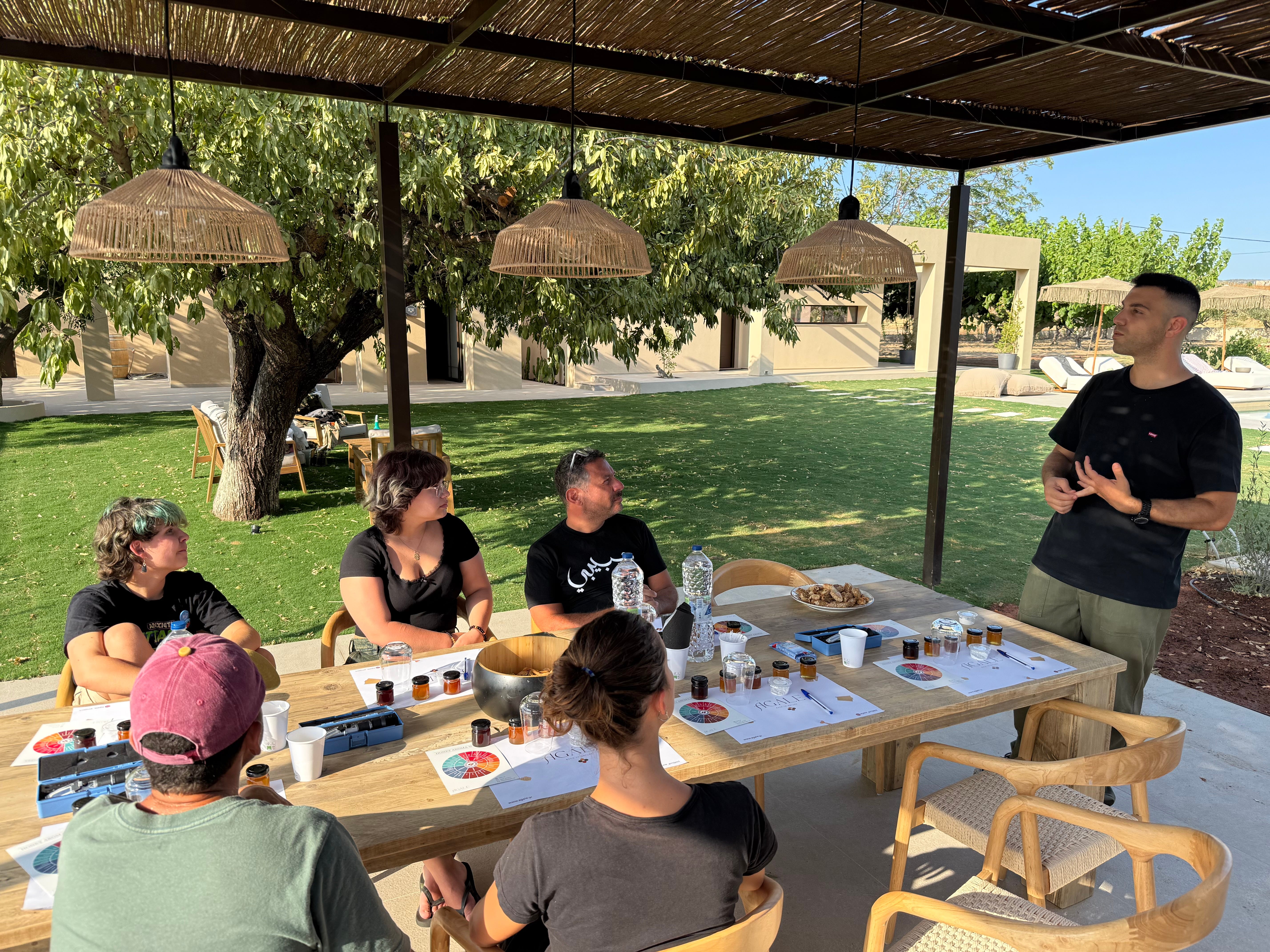
For beekeepers like Christos, tourism isn’t just therapy - it’s survival. “Honey alone doesn’t pay the bills,” he says. “But people will pay to feel close to the source.” A three-day “bee immersion” can cost €600 and includes workshops, tastings, and a souvenir jar from your own hive. “When you’ve spent hours in a field, sweating in the protective suit, working with the bees, the honey tastes so much better,” he smiles.
According to the Hellenic Beekeepers Federation, tourism now supplements income for more than 1,500 small apiaries, helping preserve traditions that might otherwise vanish.
High-end hotels have noticed. In 2023, the Amanzoe Resort on the Peloponnese launched a “Beekeeper’s Journey” - private lessons, honey tastings, and spa treatments using beeswax and propolis. On Santorini, Andronis Concept offers guests the chance to “adopt a hive,” complete with digital updates on its queen.
“It’s the new olive oil tasting,” says Christos. “But sweeter.”
At one boutique retreat in Crete, each suite overlooks active hives enclosed by glass walls - guests fall asleep to the soft hypnotic hum of pollinators.
Did You Know? (Part III)
Queen adoption: Guests can name their own queens - names like Athena, Buzz Lightyear, and Honeypop top the list.
Culinary crossover: Michelin-star chefs in Athens now source honey directly from these retreat hives.
Wild honey revival: 10% of retreat proceeds fund protection for wild bee colonies on Naxos and Evia.
Bee souvenirs: Top sellers: wax wraps, propolis tinctures, and “hive-scent” candles.
Critics warn of “commodifying nature,” turning bees into spa mascots. “If the goal is empathy, not exploitation, fine,” says Dr Lekatsas. Eleni Parisi insists her guests leave better than they arrived. “Some cry when they leave,” she says. “They plant flowers back home. They become ambassadors for bees.” Indeed, a poll of visitors found 87% planted pollinator-friendly gardens after their retreat, and 22% joined urban beekeeping projects.
On the final hour of a beekeeping experience, Christos gathers his guests around the hive one last time and asks them to close their eyes. The air smells of thyme and honey. The hum deepens into a low vibration that feels less like sound and more like communion. The guests are silent. Somewhere, a bee lands on a hand, pauses, and flies off. No one moves.
As the group leaves, Christos hands out tiny jars labelled “For when you forget the feel of the field under your feet, and the sound of the hive – you can still smell and taste this.” Inside is the honey from the labour of the bees they have spent time with – viscous and fragrant.
For Greece, bee tourism is more than novelty - it’s the rare intersection of survival and serenity, where saving the bees begins, unexpectedly, with listening.