


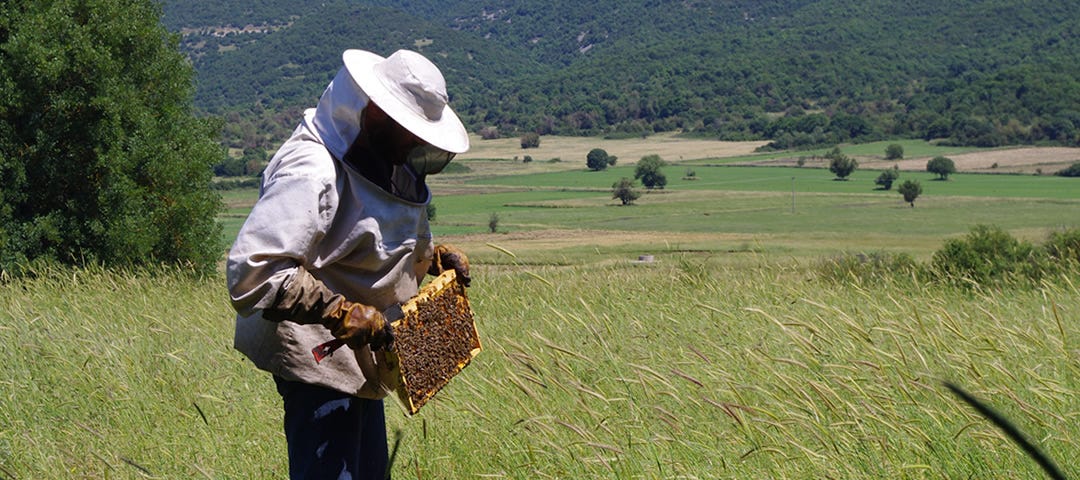
On a clear May morning east of Athens, the air begins to vibrate.
Not from traffic, but from bees. Thousands of them drift through the thyme that carpets Mount Hymettus, that long grey spine above the city. Their hum has been constant for nearly three millennia.
Ancient Athenians believed the mountain’s bees were blessed by Apollo himself. Aristotle described their honey as “clear and fragrant beyond compare.” Today, jars of that same amber nectar line shop shelves in Plaka, labelled Meli Ymittou (Hymettus Honey) still the benchmark of purity.A taste older than history
Honey was the first sweetness known to humankind. Greek archaeology proves it: clay hives from Knossos and Zakros date to around 1500 BC, complete with ceramic lids and removable bases. The Minoans may have invented commercial beekeeping.
By the time of Homer, honey was everywhere - in bread, wine, and ritual. Warriors poured it on graves; brides mixed it into wedding feasts. When Demeter wandered the earth searching for Persephone, legend says bees comforted her with honey.
The word melissa meant both “bee” and “priestess.” To serve the gods was literally to serve sweetness.
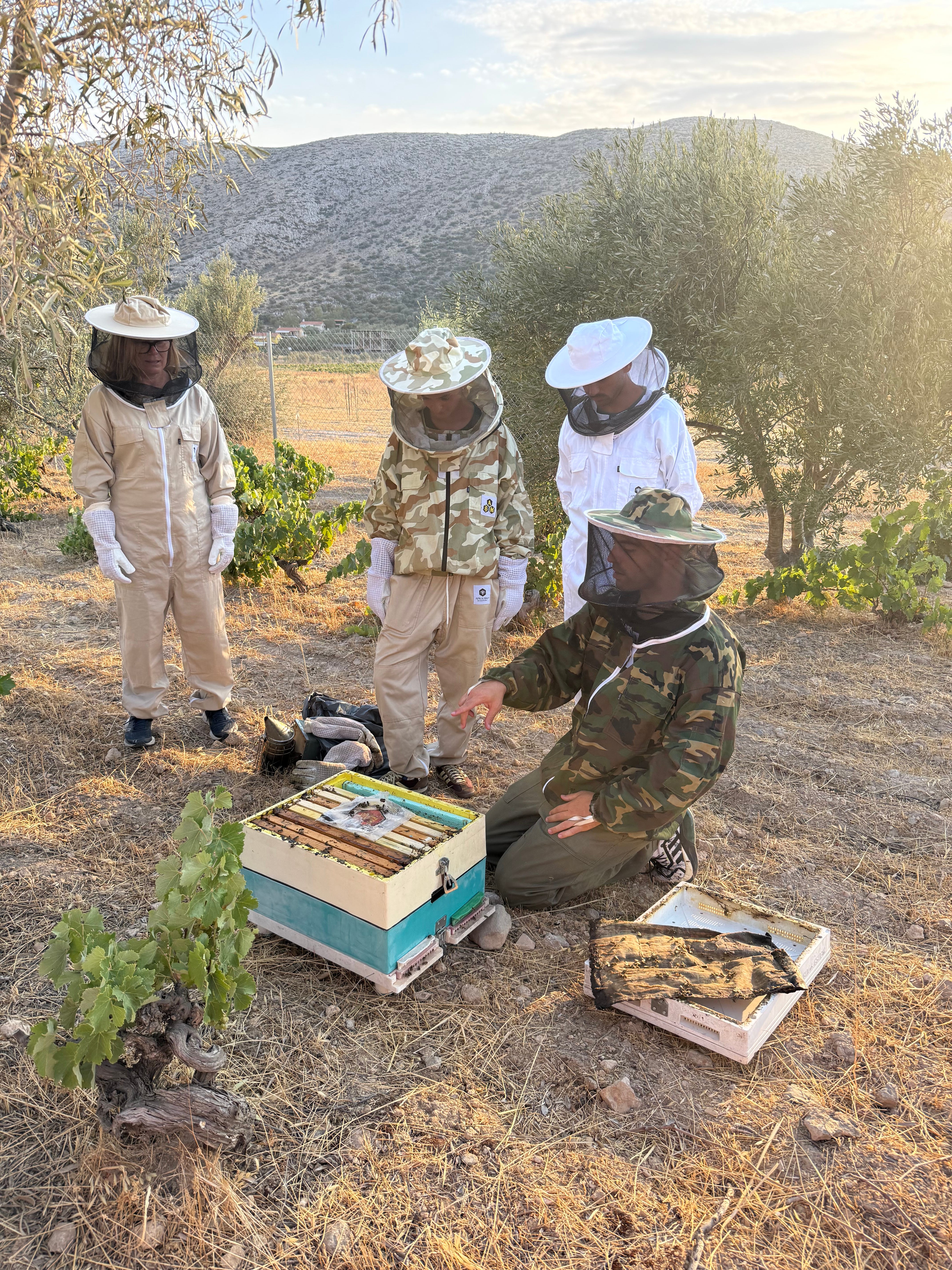
A short drive from the airport, in a patch of thyme and rockrose at my family’s farm, beekeeper Christos Skarlatos lifts the lid on one of his hives. The air blooms with scent - herbs, smoke, heat, wings. “This is land Homer and Aristotle wrote about; the bees today are the descendants of those who flew across those ancient pastures,” he says. Pointing at the bees circling one of the hives, he adds, “They feed on myth as much as flowers.”
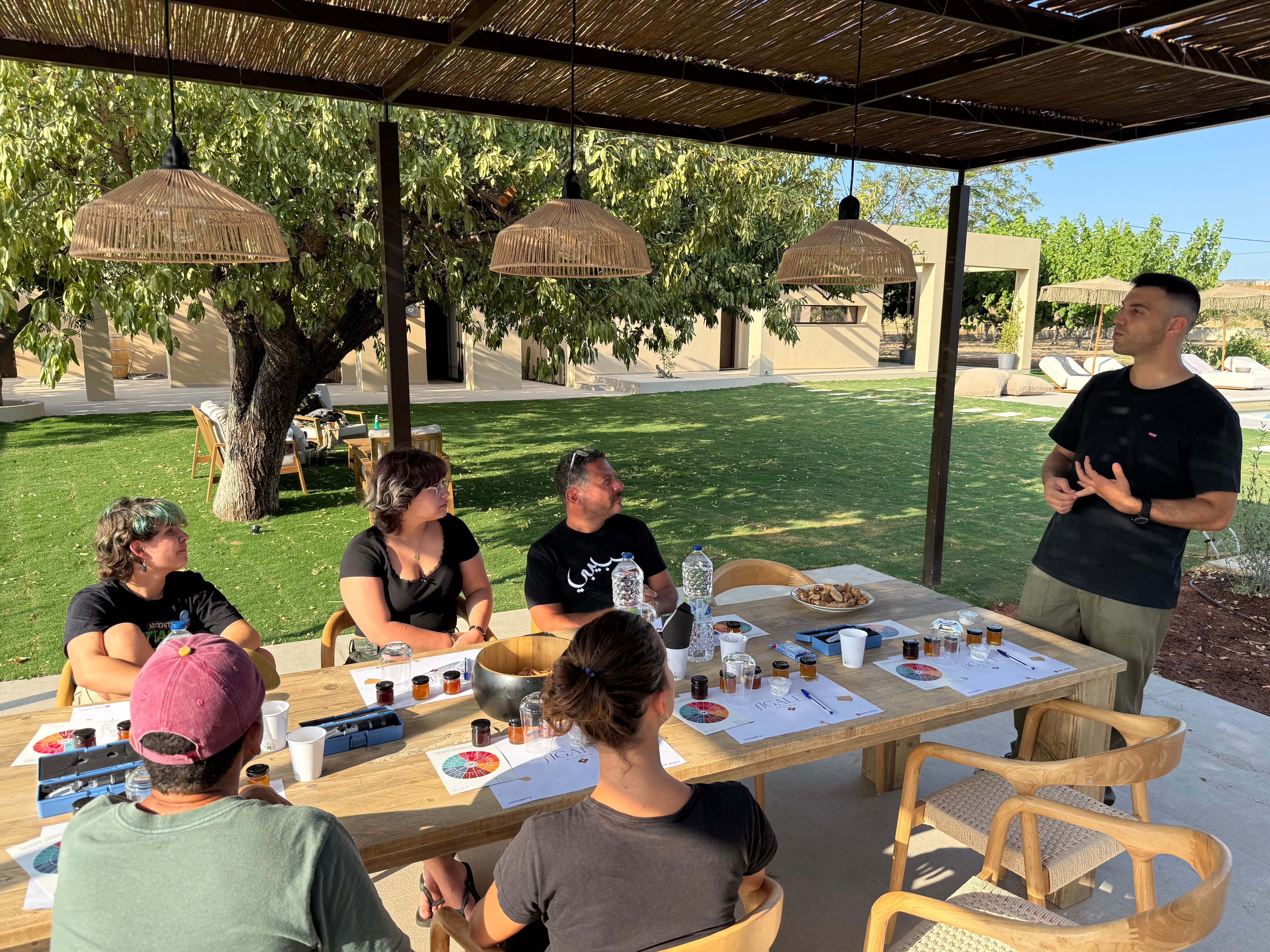
His honey is thick, slightly bitter, perfumed with the aromatic hints of wild thyme from the hillsides nearby. He jokes that he should sell the stuff to pharmacists as some of the older generation of beekeepers used to. “I’d blend it with propolis for cough syrup. My grandfather called it medicine. Science finally agrees.”
Did You Know?
Antibacterial alchemy: Modern studies show thyme honey from Hymettus has natural hydrogen-peroxide activity rivalling New Zealand’s famous Manuka.
Gods on a diet: Zeus was said to have been raised on honey and goat’s milk in a Cretan cave.
Immortality recipe: In the Orphic rites, initiates drank honey mixed with milk to symbolise eternal life.
Sweet statistics: Greece now hosts more than 1.6 million hives - the highest density of bees in Europe.
In the classical age, honey and olive oil were twin pillars of survival. Oil provided light; honey provided energy. City-states taxed it, traded it, and exported it in clay amphorae stamped with official seals. Honey from the Attican region fetched double the price of Sicilian.
Even then, quality depended on terroir. Thyme made honey sharp and aromatic; pine forests produced resinous amber; citrus groves gave floral lightness. Hippocrates prescribed each type differently — thyme for colds, fir for digestion, wildflower for sleep.
The world’s first nutritionist, he knew what modern dietitians rediscovered 2,400 years later: honey’s antioxidants and trace minerals support immunity and healing.
Democritus, when asked the secret of his longevity, supposedly replied: “Warm bread and honey each morning.” He lived past a hundred. Whether correlation or causation, the anecdote stuck.
Plato’s students at the Academy mixed honey into wine for mental clarity. Aristotle studied bee hierarchy, calling the queen the basileia — the small monarchy that ruled by cooperation. His notes read like early management theory: decentralised, but loyal to the collective.
In Greek thought, the hive was a model for society — productive and orderly.
Did You Know? (Part II)
Hymettian monopoly: In 5th-century BC Athens, only citizens could own hives on Mount Hymettus; foreign beekeepers paid rent to the city.
Preservative power: Archaeologists found 3,000-year-old honey sealed in Egyptian tombs - still edible.
Bees in politics: In Byzantine mosaics, bees symbolised diligence and divine order; emperors compared themselves to hive-keepers.
Modern miracle: Greek hospitals now test medical-grade honey dressings for burns - reviving Hippocrates’ original prescriptions.
The decline and the buzz back
Industrialisation almost silenced the hum. In the 1960s, pesticide use and urbanisation cut bee populations in half. But over the last decade, a quiet renaissance has begun. Young Athenians like my beekeeper friend Christos tired of city life are returning to the hills with solar extractors and stainless-steel centrifuges, mixing old lore with modern branding.
At weekend markets, jars gleam like amber amulets. Labels speak of terroir and myth. Labels such as Melira, long associated with honey, but also the mythological Ash-tree nymphs and nurses of Zeus. Or agale, Greek taking it slowly; apt for the gentle time it takes for bees to make their honey. The marketing may be new, but the appeal is ancient - bottled sunlight and faith in nature’s equilibrium.
Late afternoon, the bees drift home heavy with pollen. Christos stands among the hives, bare-handed, unafraid. “They know me,” he says. He smokes them gently, waits, then closes the lid. The air smells of thyme and wax and something older than language.
Honey, like the olive, is a time capsule - proof that patience pays. Every spoonful carries the work of a hundred thousand bees, each making a teaspoon of sweetness in its lifetime. Collectively, they build immortality.=
Perhaps that’s why the ancients worshipped them: not for their sting, but for their faith.
Sources